
Have you lately found yourself feeling lethargic or unmotivated? Perhaps you’re becoming someone who cries easily, or on the other hand, someone who can’t bring tears no matter what. Maybe you’re struggling with poor sleep, losing interest in meeting friends, or finding it hard to enjoy activities you once loved.
It’s critical to recognize that mental health issues don’t always present themselves as feelings of wanting to give up. The symptoms can be subtle, and you might be missing them without even realizing it.
That’s why seeking support early, even when things don’t seem critical, is crucial.
Mental health services play a vital role in helping people navigate emotional challenges, life transitions, and periods of stress that can quietly build over time. However, many individuals delay seeking support simply because they are unsure of what mental health services actually include or whether they’re “struggling enough” to seek help.
The truth is, mental health services are not just for moments of crisis. They are there to support well-being, emotional balance, and personal growth at every stage of life. Understanding your options can help you make informed, confident choices about your care.
In this blog, we’ll explore the significance of mental health services in supporting your well-being and how they can make a difference in your life.
What Are Mental Health Services?
Mental health services are professional care systems developed to support individuals in managing emotional, psychological, and relational well-being. These services cater to a range of needs, from navigating stress and difficult life transitions to addressing more complex mental health concerns. The goal is not just to treat symptoms but to help individuals build a deeper understanding of themselves and develop healthier coping mechanisms, relationships, and overall life skills.
Mental health services are not about labeling or diagnosing individuals unnecessarily. Instead, they are grounded in evidence-based practices, offering tailored support to help individuals navigate their unique struggles. When provided thoughtfully, these services go beyond temporary fixes, becoming part of a broader, more comprehensive mental health care approach that supports the individual as a whole.
Such services are available at all stages of life, helping people of all ages, from children to adults, manage challenges effectively. They can include therapy, counseling, crisis intervention, and community resources, all aimed at improving a person’s mental and emotional health.
Types of Mental Health Services
There are many types of mental health services, each created to support different emotional needs, life stages, and therapeutic goals. Understanding these options can help individuals choose care that feels aligned, supportive, and sustainable rather than overwhelming or one-size-fits-all.
Furthermore, public health organizations, such as the Centers for Disease Control and Prevention (CDC), consistently emphasize that access to professional mental health care is a critical component of overall health and well-being.
The CDC highlights therapy and counseling as evidence-based supports that help individuals manage stress, cope with trauma, and improve quality of life, especially when trained mental health professionals deliver services.
Let’s discuss some common kinds of mental health services available:
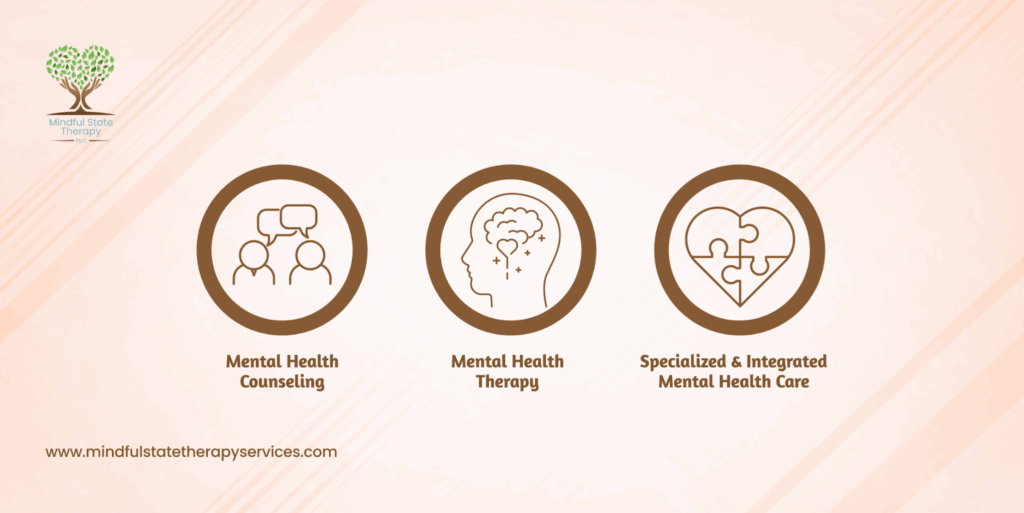
- Mental Health Counseling
Mental health counseling often focuses on present-day concerns and practical coping strategies. It supports individuals navigating stress, anxiety, grief, work-related pressure, life transitions, or relationship challenges. Counseling may be short-term or ongoing, depending on a person’s needs and goals.
Through mental health counseling, individuals often develop stronger emotional awareness, improved communication skills, and healthier ways to manage daily stressors. The CDC notes that supportive counseling can play a critical role in reducing emotional distress and preventing concerns from becoming more severe when addressed early and consistently.
- Mental Health Therapy
Mental health therapy typically involves deeper, more exploratory work that unfolds over time. Therapy may address long-standing emotional patterns, trauma experiences, attachment wounds, identity development, or nervous system dysregulation. Sessions focus on insight, emotional regulation, and creating meaningful, lasting change rather than quick symptom relief alone.
Mental health therapy is one of the most widely used and researched mental health treatment options, with substantial evidence supporting its effectiveness for anxiety, depression, trauma-related conditions, and relational concerns.
According to the CDC, engaging in ongoing therapy with a licensed professional can significantly improve emotional functioning and resilience, particularly when care is trauma-informed and relationship-based.
- Specialized & Integrated Mental Health Care
Some mental health services are designed for specific populations or needs, such as children, adolescents, families, or individuals recovering from trauma. Other approaches integrate multiple therapeutic frameworks to address emotional, relational, and somatic experiences together.
This type of care is often part of comprehensive mental health care, which adapts to a person’s developmental stage, cultural background, lived experiences, and support systems.
How Mental Health Services Support Your Well-Being
Mental health services support well-being across multiple layers of life, not just emotional relief. Through mental health counseling and mental health therapy, individuals gain support that influences decision-making, physical health, identity development, and overall life functioning. When delivered by a licensed mental health therapist, care becomes both stabilizing and transformative.
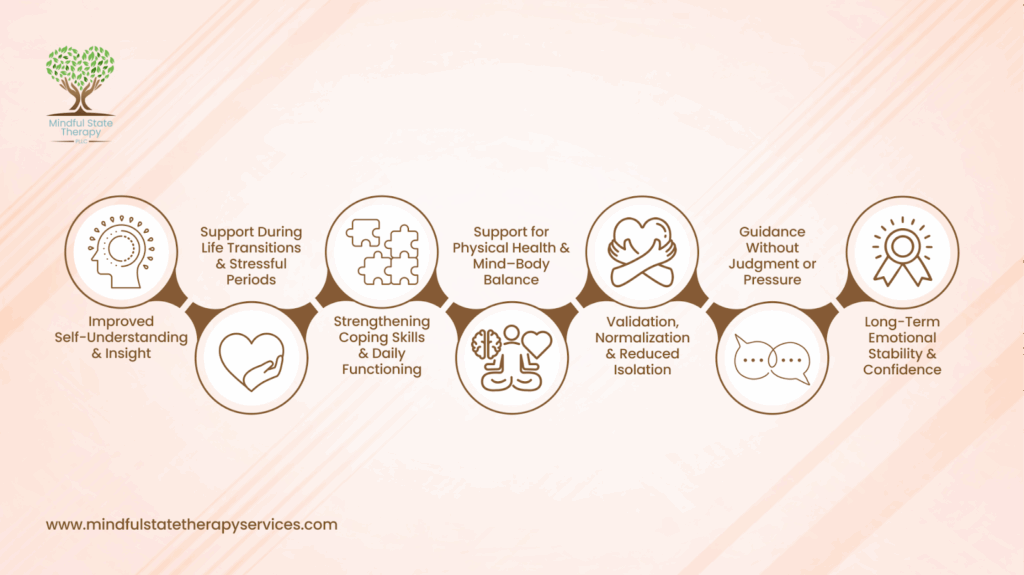
Improved Self-Understanding & Insight
One of the most overlooked benefits of professional mental health services is increased self-awareness. Therapy helps individuals recognize patterns in thoughts, behaviors, emotional responses, and relationships that may otherwise remain unconscious.
This insight allows people to understand why they respond the way they do, rather than feeling controlled by their reactions. Across many types of mental health services, this deeper self-understanding becomes the foundation for meaningful and lasting change.
Support During Life Transitions & Stressful Periods
Mental health services are especially valuable during periods of transition, even when no diagnosis is present. Career changes, parenthood, caregiving, loss, relocation, or major life decisions can strain emotional resources.
Mental health counseling provides structured support during these moments, helping individuals process uncertainty, manage stress, and make grounded decisions. Knowing when to seek mental health services during transitions can prevent burnout, emotional overload, and long-term distress.
Strengthening Coping Skills & Daily Functioning
Mental health treatment options often focus on helping people function better in daily life. This includes managing work stress, improving sleep routines, reducing overwhelm, and navigating responsibilities with more clarity.
Through comprehensive mental health care, individuals learn practical strategies that support consistency and balance. These skills are not limited to crisis moments; they enhance day-to-day functioning and overall quality of life.
Support for Physical Health & Mind–Body Balance
Mental and physical health are deeply connected. Chronic stress, anxiety, and unresolved emotional strain can impact sleep, immunity, digestion, and energy levels.
Mental health therapy supports well-being by addressing the emotional and psychological factors that influence physical health. Many mental health care options include regulation-based approaches that help calm the nervous system, which in turn supports better physical functioning and recovery.
Validation, Normalization & Reduced Isolation
Another powerful way mental health services support well-being is by reducing isolation. Many individuals struggle silently, believing their experiences are unique or “wrong.”
Working with a licensed mental health therapist provides validation and normalization. Clients learn that their reactions often make sense given their experiences. This reduces shame and helps people feel less alone, which is a core benefit of mental health counseling that usually goes unspoken.
Guidance Without Judgment or Pressure
Unlike advice from friends or family, professional mental health services offer guidance without expectations or pressure. Therapy is not about telling someone what to do, but about helping them hear their own needs more clearly.
This nonjudgmental space allows individuals to explore choices, values, and goals safely. Among the many mental health care options available, therapy stands out as a space where clarity emerges without force.
Long-Term Emotional Stability & Confidence
Over time, mental health services help individuals trust themselves more. Through reflection, practice, and support, clients develop confidence in their ability to manage emotions, relationships, and challenges independently.
This long-term stability is one of the most meaningful outcomes of comprehensive mental health care. Rather than relying on external reassurance, individuals build an internal sense of steadiness that supports ongoing well-being.
What Makes Mental Health Services Effective?
Effective mental health services are not defined by a single method or diagnosis. Their impact comes from how care is delivered and how well it adapts to the individual.
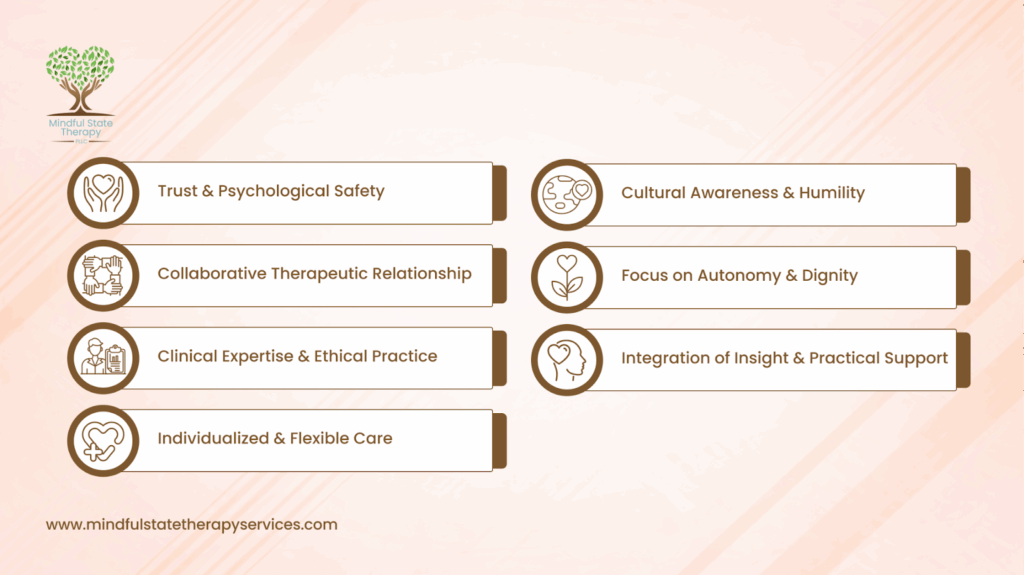
Trust & Psychological Safety
Healing begins when individuals feel emotionally and physically safe in the therapeutic space. Being met with respect, consistency, and nonjudgment allows people to share openly, explore difficult experiences, and move at their own pace without fear of being misunderstood or dismissed.
Collaborative Therapeutic Relationship
Adequate care is built through partnership rather than authority. The therapist and client work together to identify goals, explore challenges, and shape the direction of care. This collaboration helps individuals feel empowered and actively engaged in their own healing process.
Clinical Expertise & Ethical Practice
Professional mental health services are grounded in evidence-informed approaches, ethical standards, and clear professional boundaries. A licensed mental health therapist brings both training and accountability to the work, ensuring care is safe, responsible, and aligned with best clinical practices.
Individualized & Flexible Care
Everyone heals differently. Effective mental health services adapt to changing needs, life circumstances, and emotional readiness. Treatment recognizes that progress may come in cycles rather than straight lines and allows space for reflection, adjustment, and growth.
Cultural Awareness & Humility
Care honors each person’s lived experience, identity, and cultural background. Therapists approach differences with curiosity and respect, avoiding assumptions and recognizing how family systems, community, and social context shape emotional health.
Focus on Autonomy & Dignity
Mental health services support personal agency rather than dependency. Individuals are encouraged to make informed choices about their care, develop self-trust, and move toward greater independence and confidence over time.
Integration of Insight & Practical Support
Effective care balances emotional insight with practical tools. Alongside a more profound understanding, individuals gain skills that support daily life, such as stress regulation, communication strategies, and coping techniques that can be used beyond the therapy room.
This approach allows mental health services to support not only healing but also long-term well-being, self-trust, and resilience.
When to Seek Mental Health Services and How to Choose the Right Care
Knowing when to seek mental health services is not always straightforward. Support is often most effective when accessed early, not only during moments of crisis. Mental health services can help restore balance, clarity, and emotional stability at many stages of life.
You may consider seeking mental health services if you notice:
- Ongoing anxiety, worry, or emotional overwhelm that does not ease with time
- Persistent low mood, irritability, or emotional numbness
- Changes in sleep, appetite, or energy levels
- Difficulty concentrating, making decisions, or staying present
- Feeling disconnected from yourself, your relationships, or daily life
- Repeated patterns in relationships that feel distressing or unresolved
- Stress related to work, caregiving, identity changes, or life transitions
Seeking mental health services is not a sign of failure. It is a proactive choice to care for your well-being and address concerns before they become more disruptive.
Understanding when to seek mental health services allows individuals to respond with intention rather than urgency and to create space for sustainable support.
And when you feel ready to take your first step toward greater mindfulness and mental well-being, we’re here to walk that path with you.
Take the First Step Toward Your Mental Well-Being with Mindful State
At Mindful State Therapy Services PLLC, we offer thoughtful, professional mental health services designed to meet you where you are. Our licensed clinicians provide mental health counseling and therapy that support emotional regulation, insight, resilience, and long-term well-being. Care is collaborative, respectful, and tailored to your unique experiences and goals.
Choosing to explore mental health services is an investment in your well-being. With the fitting therapeutic support, many people find greater clarity, balance, and confidence in how they move through life. You do not have to carry everything on your own.
When you are ready to prioritize your mental well-being, we are here to support you every step of the way.
Schedule your 20-minute consultation to learn how our mental health services can support you.