
If you are a parent, caregiver, or educator, you may have noticed subtle shifts in a child’s demeanor. Often, when children struggle, they don’t have the vocabulary to say so; instead, they become withdrawn or restless. These changes are rarely signs of “bad behavior,” they are signals of an internal struggle. This is particularly true for children facing developmental delays.
When a child’s communicative or social abilities don’t yet match their internal needs, the resulting frustration often manifests as emotional outbursts or shutting down. They aren’t being difficult; they are simply overwhelmed by a world they cannot yet navigate.
Furthermore, modern family life presents its own hurdles. Busy schedules and a shortage of specialized local providers can make seeking help feel like a challenge. This is where online play therapy has become vital.
Once viewed with hesitation, virtual therapy has evolved into a developmentally responsive, evidence-informed way to support children. By meeting children in their comfort environment, trained clinicians can bridge the gap caused by developmental or emotional delays, offering a path to regulation and connection without the stress of a commute.
In this blog, we explore how online play therapy works, who it helps, and why it is a game-changer for children navigating developmental and emotional challenges.
What Is Online Play Therapy for Kids?
Online play therapy for kids is a form of child-centered mental health care delivered through secure, virtual platforms by licensed and play-therapy–trained clinicians. It adapts the core principles of traditional play therapy to an online environment while preserving the most important elements of the therapeutic process: safety, relationship, and symbolic expression.
Play therapy is based on a simple but powerful truth: play is the natural language of children. While adults rely heavily on verbal communication, children express their inner world through toys, art, storytelling, movement, and imagination. Online play therapy allows children to continue using this language in a thoughtfully structured virtual space.
Sessions may include:
- Creative play with toys available at home
- Art and drawing activities
- Storytelling and imaginative role-play
- Games designed to explore emotions and relationships
- Sensory-based activities adapted for the virtual format
This approach is very different from asking a child to sit still and talk about their feelings. Instead, therapists trained in therapy for children online observe themes, emotional patterns, and symbolic expressions as they naturally emerge through play.
When delivered by licensed professionals, online counseling for kids adheres to the same ethical standards, confidentiality requirements, and clinical rigor as in-person care, while offering greater flexibility for families.
How Online Play Therapy Works
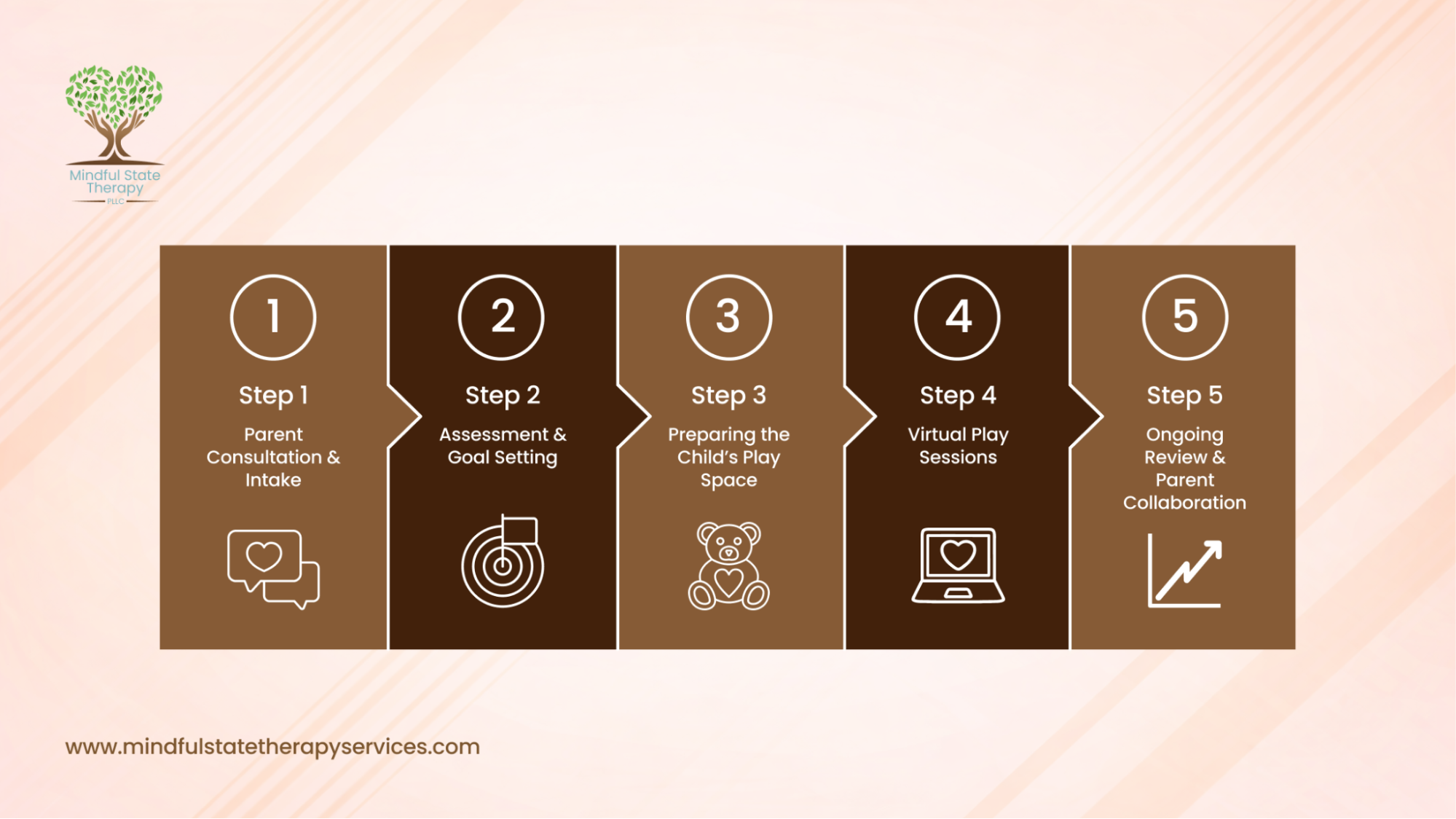
Parents often wonder how online play therapy works, especially when their child is young or easily distracted. In practice, the process is intentionally structured to support engagement, safety, and consistency.
Step 1: Parent Consultation & Intake
The process typically begins with a caregiver consultation. Parents share concerns, developmental history, family context, and therapy goals. This allows the therapist to understand the child’s emotional landscape and determine whether online play therapy for kids is an appropriate fit.
Step 2: Assessment & Goal Setting
Rather than relying solely on diagnostic labels, therapists assess how the child expresses emotions, responds to stress, and navigates relationships. Goals are often framed around emotional regulation, expression, confidence, and connection rather than solely symptom elimination.
Step 3: Preparing the Child’s Play Space
Children participate from a familiar environment, often their bedroom or a quiet area of the home. Therapists may recommend simple materials, such as paper, markers, toys, or figurines, to support expressive play. This familiarity can increase comfort and emotional safety.
Step 4: Virtual Play Sessions
Sessions are conducted through HIPAA-compliant platforms to protect privacy. The therapist gently guides play, tracking emotional themes, reflecting feelings, and supporting the child’s natural process. This is where emotional regulation therapy for kids unfolds organically through relationships and play.
Step 5: Ongoing Review & Parent Collaboration
Parents receive periodic updates focused on themes, progress, and support strategies, without breaching the child’s confidentiality. Therapy evolves as the child’s needs change.
This thoughtful structure ensures online play therapy for kids remains both developmentally appropriate and clinically effective.
Types of Challenges Online Play Therapy Can Support
Online play therapy for kids supports a wide range of emotional and behavioral concerns. It is particularly effective for children who struggle to verbalize their experiences or feel overwhelmed by direct questioning.
Common areas of support include:
Anxiety and Worry: Children experiencing excessive fear, separation anxiety, or generalized worry may benefit from online therapy for childhood anxiety, where play becomes a safe outlet for expressing uncertainty and building coping skills.
Emotional Dysregulation: Frequent meltdowns, shutdowns, or mood swings often signal nervous system overwhelm. Through emotional regulation therapy for kids, play therapy helps children identify feelings and practice calming strategies in real time.
Behavioral Challenges: What may look like “acting out” often reflects unmet emotional needs. Behavioral therapy for kids online, when play-based, focuses on understanding the meaning behind behaviors rather than simply stopping them.
Trauma and Stress: Children exposed to loss, medical trauma, family conflict, or sudden changes may struggle internally. Online play therapy provides symbolic distance, allowing children to process experiences safely.
Social and Developmental Difficulties: Play therapy supports confidence, communication, and relational skills that carry into school and peer environments.
How Online Therapy Works for Developmental Delays in Children?
For many families, concerns about a child’s emotional or behavioral well-being are closely tied to questions about development. Parents often notice that their child is struggling to reach certain milestones, express emotions clearly, or engage socially in ways that feel age-appropriate. While every child develops at their own pace, persistent challenges in these areas may signal that additional support is helpful.
Online play therapy for kids can be an effective and gentle way to support children experiencing developmental delays or uneven skill development. Because play is the primary way children learn, regulate, and communicate, therapy rooted in play naturally aligns with a child’s developmental needs.
Understanding Developmental Delays in Children
Developmental skills are commonly grouped into several key areas:
- Movement and motor skills, including both large body movements and fine motor coordination
- Cognitive development, such as problem-solving and understanding cause and effect
- Social and emotional development, including connection, empathy, and emotional expression
- Speech, language, and communication
- Daily living skills, such as dressing, eating, and self-care
Children may show delays in one area while progressing typically in others. These differences do not mean a diagnosis, but they do suggest that a child may benefit from targeted support. Early intervention, especially when delivered in a developmentally attuned way, can significantly improve long-term outcomes.
This is where online therapy for children, particularly play-based approaches, becomes valuable.
Why Play-Based Online Therapy Supports Development
Children do not learn best through lectures or pressure. They learn through exploration, repetition, and relationship. Online play therapy for kids uses therapeutic play activities to support developmental growth while honoring the child’s pace and interests.
In a virtual play therapy setting, therapists may:
- Observe how a child approaches play, problem-solving, and interaction
- Use play themes to understand emotional and developmental needs
- Support skill-building through games, storytelling, art, and movement
- Encourage confidence, flexibility, and emotional regulation
This makes online counseling for kids especially effective for children who struggle to express themselves verbally or become overwhelmed in traditional talk-based settings.
How Does Online Play Therapy Support Emotional & Social Development
Many developmental challenges first manifest in emotional or social behavior. Children may experience frustration, anxiety, withdrawal, or frequent emotional outbursts when their skills do not match environmental demands. Through emotional regulation therapy for kids, play therapy helps children build awareness of feelings, tolerate distress, and develop coping strategies in a safe and supportive way.
Play-based virtual sessions can also support:
- Turn-taking and cooperation
- Emotional labeling and expression
- Empathy and perspective-taking
- Confidence in social interaction
These skills naturally generalize into home, school, and peer environments over time.
Integrating Skill Development Into Everyday Life
One of the strengths of Online play therapy for kids is that therapy takes place in the child’s real-life environment. Therapists can collaborate with caregivers to suggest simple play-based activities that reinforce progress between sessions.
Parents may receive guidance on:
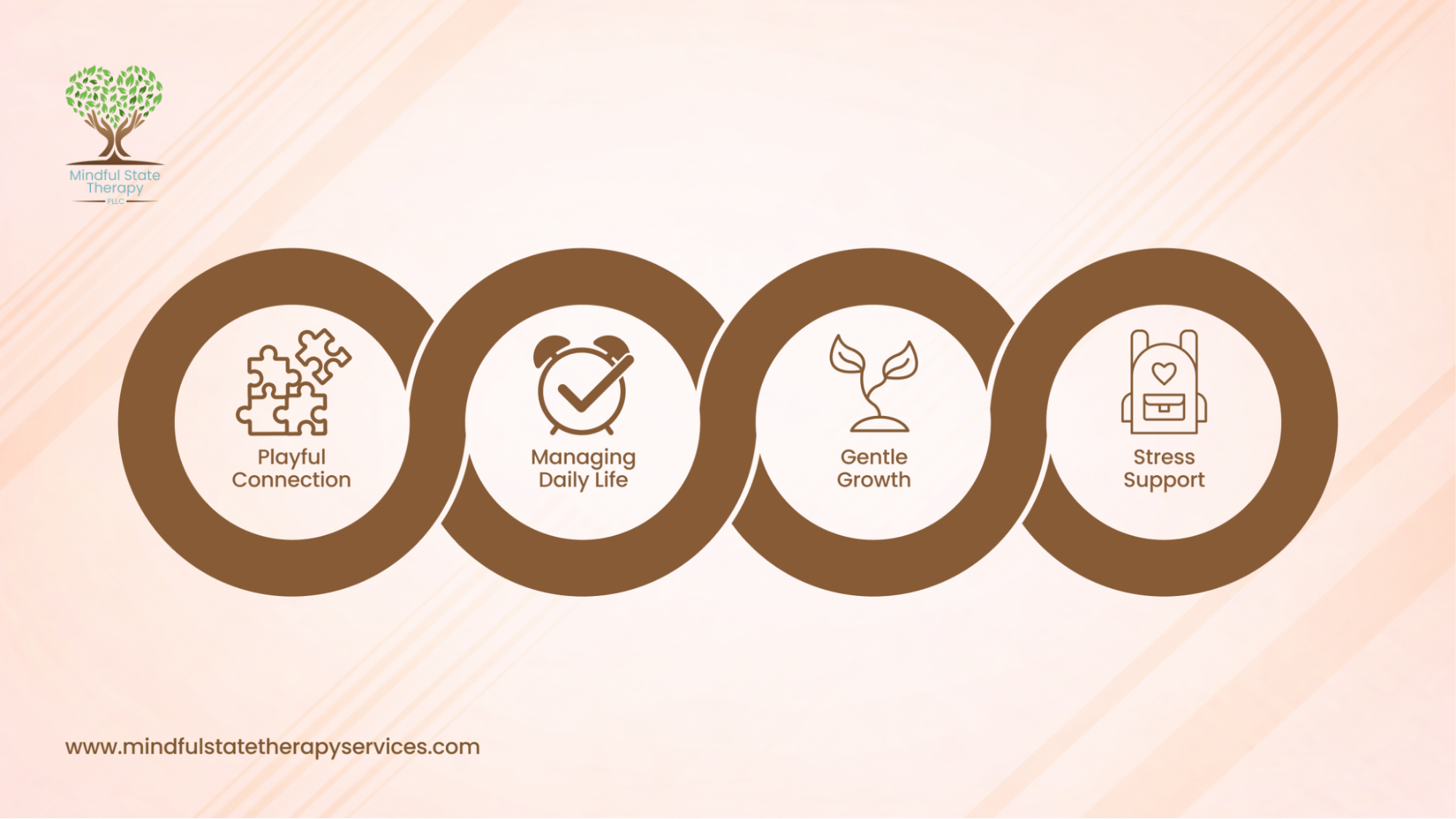
- Playful Connection: Activities that unlock communication.
- Managing Daily Life: Strategies to reduce routine overwhelm.
- Gentle Growth: Building independence without pressure.
- Stress Support: Tools for smoother school and sleep transitions.
This continuity helps ensure that growth continues after the session ends.
Benefits of Online Play Therapy for Kids
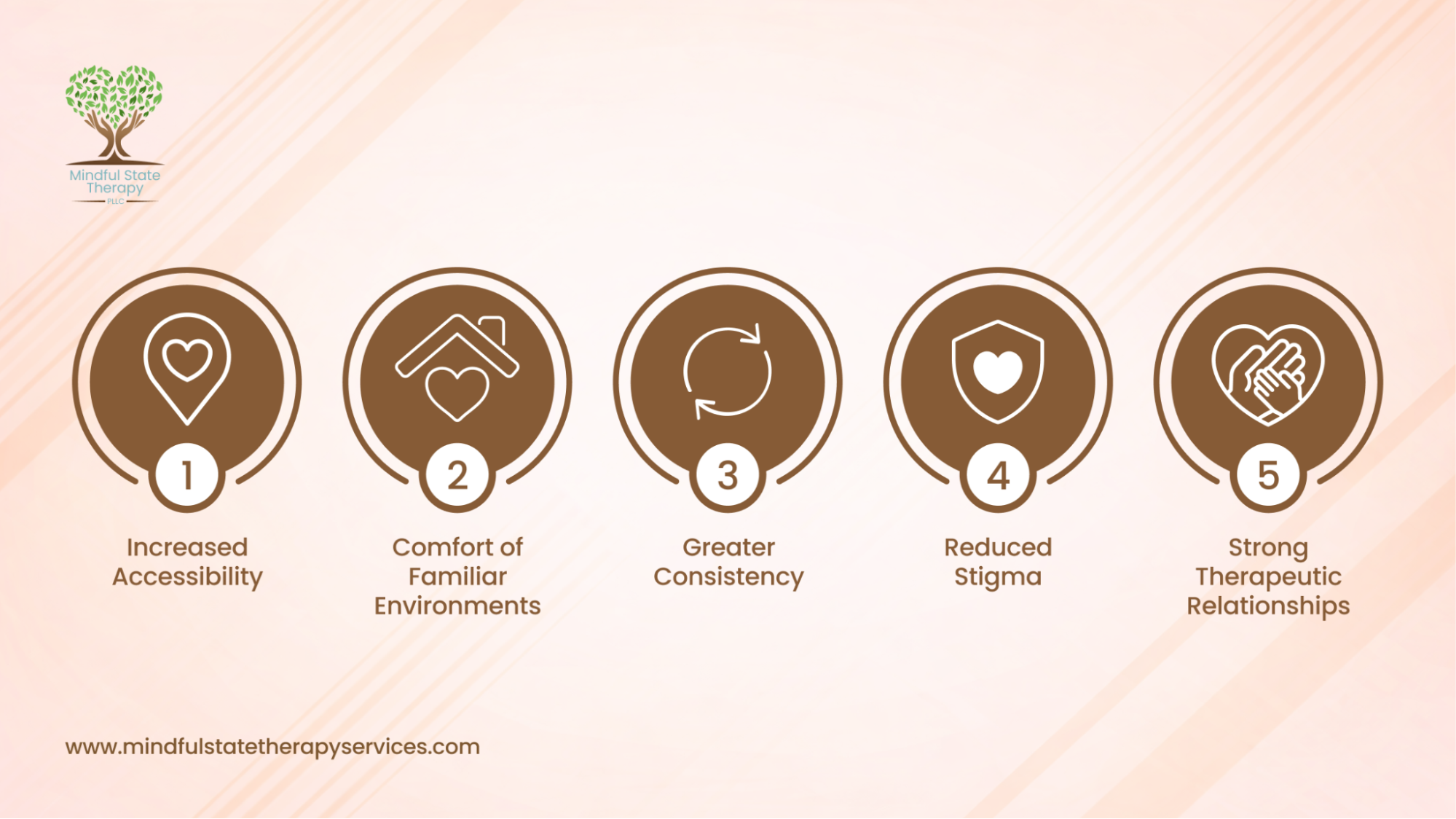
The growing popularity of virtual care highlights the real-world benefits of online play therapy for families and children alike.
- Increased Accessibility: Families in rural or underserved areas gain access to specialized providers without long travel times. This makes online therapy for children more equitable and accessible.
- Comfort of Familiar Environments: Children often feel safer expressing emotions at home. This comfort can deepen engagement and emotional honesty.
- Greater Consistency: Virtual sessions reduce cancellations due to illness, weather, or transportation issues. Consistency is especially important for children who rely on routine.
- Reduced Stigma: Some children feel anxious about visiting a therapist’s office. Online counseling for kids normalizes care and reduces barriers to engagement.
- Strong Therapeutic Relationships: Contrary to common myths, meaningful therapeutic bonds can and do form online. The relationship, not the room, is what drives healing.
Online Play Therapy: What Parents and Caregivers Should Know
There’s a common question parents ask: Is online play therapy effective?
Research and clinical experience increasingly suggest that, when delivered by trained professionals, online play therapy for kids can be just as effective as in-person sessions for many concerns. Studies show comparable outcomes across anxiety reduction, emotional regulation, and behavioral improvement.
Effectiveness depends on several factors:
- Therapist training and experience
- Ethical use of secure platforms
- Child readiness and developmental level
- Parental support and involvement
While virtual care may not be appropriate for every situation, it has proven to be a powerful option for many families seeking timely, consistent support.
Online Play Therapy vs In-Person Therapy
Both formats have value, and neither is inherently superior. Online play therapy for kids offers flexibility and accessibility, while in-person therapy may be preferable for children who require more intensive sensory or environmental support.
Many families appreciate hybrid models that allow movement between formats as needs change. The best approach is always individualized, guided by clinical judgment and the child’s well-being.
What to Look for in an Online Play Therapist
Choosing the right provider is essential for effective care. When exploring online play therapy for kids, parents should consider:
- Licensure and credentials
- Specialized training in play therapy
- Experience with children’s developmental stages
- Trauma-informed and neurodiversity-affirming practices
- Clear communication and ethical boundaries
Not all virtual providers are equally trained. Working with professionals experienced in behavioral therapy for kids online and play-based approaches ensures care is both safe and effective.
When Online Play Therapy May Be a Good Fit
Online play therapy for kids can be especially helpful when:
- Travel or mobility is limited
- A child feels safer at home
- Scheduling conflicts make in-person sessions difficult
- Families seek continuity during transitions
Early support is often more effective than waiting for concerns to escalate. Seeking help is not a sign of failure; it is a thoughtful, proactive step toward nurturing a child’s emotional health.
If you sense that your child could benefit from additional care and gentle support, Mindful State offers online play therapy for kids in a space rooted in warmth, safety, and understanding. We welcome families with compassion and are here to support your child’s growth every step of the way.
Take the First Step Toward Supporting Your Child with Mindfulness Therapy

At Mindful State Therapy Services PLLC, we provide online mental health services for children that are grounded in care, professionalism, and a deep respect for each child’s unique developmental journey. Our licensed clinicians offer specialized online play therapy through secure, confidential platforms, ensuring that quality emotional support is accessible to your family, no matter your schedule.
Our approach to child therapy is both thoughtful and collaborative. Whether your child is navigating anxiety, developmental delays, or the stresses of life transitions, we focus on creating a supportive virtual space that promotes emotional regulation, social-emotional insight, and long-term resilience. We understand that a child does not need to be in crisis to benefit from support; our care is paced with intention and guided by professionals who value both clinical excellence and the power of human connection.
Choosing to explore online play therapy is an investment in your child’s future well-being. With the right support, children can gain the tools to process internal struggles and move through the world with greater confidence and balance. You do not have to navigate these challenges alone.
Schedule your 20-minute consultation to learn how our services can support your child’s path toward healing and growth.