

At times, you may find your thoughts racing faster than you can make sense of them. Emotions may feel harder to manage, and certain behaviors can begin to repeat in ways that no longer feel helpful. During moments like these, working with a CBT therapist can offer meaningful support and practical tools to help you move through life’s challenges with greater clarity.
Cognitive Behavioral Therapy (CBT) is one of the most widely researched and effective forms of psychotherapy. A licensed CBT therapist helps individuals understand how thoughts, emotions, and behaviors influence one another. Through this process, therapy introduces structured strategies that support healthier thinking patterns and more balanced emotional responses.
Through guided conversations, reflective exercises, and skill-building practices, CBT helps people develop greater awareness of their internal experiences. Whether someone is seeking cognitive behavioral therapy for anxiety, looking for support from a CBT therapist for depression, or exploring the flexibility of online CBT therapy, this approach offers practical tools that can support long-term mental well-being.
In this blog, we’ll explore what a CBT therapist does, how Cognitive Behavioral Therapy works, and the many ways this approach can support emotional balance, resilience, and personal growth.
What Is Cognitive Behavioral Therapy?
Cognitive Behavioral Therapy is a structured, evidence-based form of psychological treatment that focuses on how thoughts, emotions, and behaviors influence one another. The core idea behind CBT is simple yet powerful: the way we interpret situations can shape how we feel and how we respond.
When negative thought patterns develop over time, they can contribute to emotional distress or behavioral habits that reinforce stress, anxiety, or low mood. A CBT therapist helps individuals recognize these patterns and develop healthier ways of responding.
Unlike some therapeutic approaches that focus primarily on past experiences, CBT often emphasizes present-day thinking patterns and practical strategies for change. This does not mean the past is ignored. Instead, therapy helps clients understand how past experiences may have shaped their current beliefs and behaviors.
Many individuals seek cognitive behavioral therapy for anxiety because CBT helps reduce excessive worry and catastrophic thinking. Others work with a CBT therapist for depression to address persistent negative thoughts and low motivation.
What is The Role of A CBT Therapist
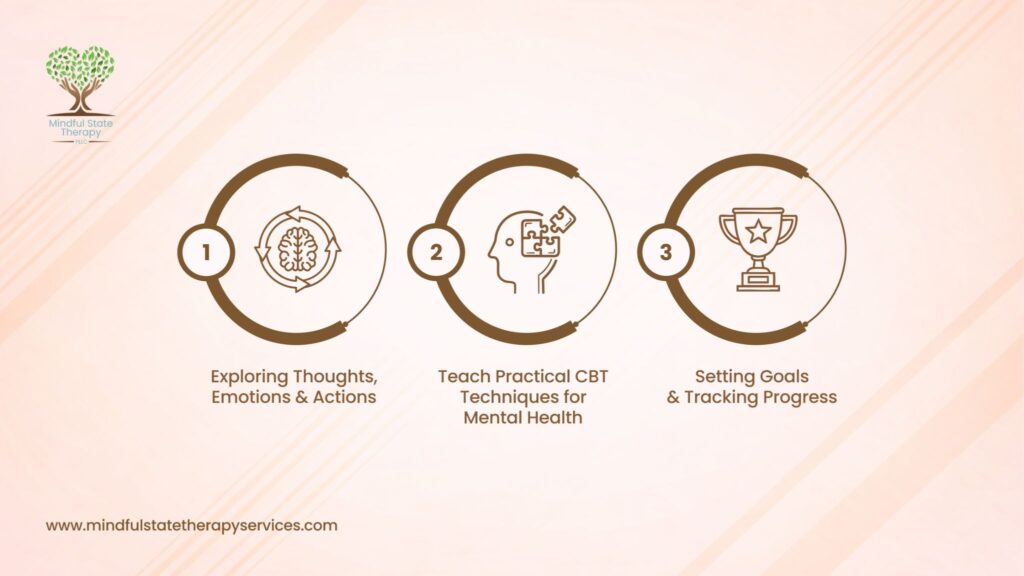
A CBT therapist plays an active and collaborative role in helping clients understand their internal experiences and develop practical tools for change. Rather than simply listening, therapists guide individuals through structured exercises and conversations that build awareness and emotional resilience.
Exploring Thoughts, Emotions & Actions
One of the first things a CBT therapist helps clients explore is how their thoughts influence their emotional experiences. Many people develop automatic thought patterns that happen so quickly they may not even notice them.
For example, a person might interpret a small mistake as proof that they are incapable or assume that a difficult conversation will lead to rejection or conflict.
Through guided reflection, a licensed CBT therapist helps clients recognize these patterns and understand how they may contribute to stress or emotional distress. This awareness becomes the foundation for developing healthier thinking habits. These insights are particularly helpful for individuals seeking cognitive behavioral therapy for anxiety, where persistent worry and negative predictions can feel overwhelming.
Teach Practical CBT Techniques for Mental Health
One of the most valuable aspects of working with a CBT therapist is learning practical strategies that can be used outside of therapy sessions.
These CBT techniques for mental health may include:
- Identifying and challenging unhelpful thoughts
- Practicing cognitive reframing
- Behavioral activation to increase motivation
- Developing healthier coping strategies
- Learning stress management and emotional regulation tools
Over time, these techniques help individuals build confidence in their ability to navigate stress, uncertainty, and emotional challenges.
Because these tools are practical and structured, they are also well-suited for online CBT therapy, allowing clients to apply what they learn in their everyday environments.
Setting Goals & Tracking Progress
A CBT therapist often collaborates with clients to identify meaningful therapy goals. These goals may involve improving emotional regulation, reducing anxiety symptoms, strengthening self-confidence, or developing healthier habits.
Therapy sessions may include exercises that help track patterns between sessions, encouraging reflection and gradual progress. This structured approach is one reason many individuals appreciate the benefits of cognitive-behavioral therapy. Rather than feeling abstract or vague, CBT provides clear strategies that can support measurable change over time.
How Cognitive Behavioral Therapy Works
Understanding how CBT works can help individuals feel more comfortable beginning therapy. While every person’s experience is unique, most CBT processes follow several general stages.
1. Initial Assessment and Understanding
The early sessions with a CBT therapist focus on understanding the client’s experiences, challenges, and goals. This stage allows the therapist to learn about patterns in thinking, emotional responses, and behaviors.
A licensed CBT therapist may also explore how stressors, relationships, or life transitions are contributing to the current concerns.
2. Recognizing Unhelpful Thinking Patterns
Once patterns become clearer, therapy focuses on identifying thoughts that may be contributing to distress.
These patterns may include:
- Catastrophizing: Expecting the worst without evidence.
- Overgeneralization: Making broad conclusions based on one event.
- Negative self‑judgment: Criticizing oneself excessively.
- All‑or‑nothing thinking: Seeing things in extremes without a middle ground.
Through CBT techniques for mental health, individuals learn to notice these thoughts and explore alternative perspectives.
3. Developing Healthier Cognitive Patterns
A CBT therapist then guides clients in challenging unhelpful beliefs and developing more balanced ways of thinking.
This process does not involve forcing positivity. Instead, it focuses on developing realistic, compassionate perspectives that support emotional well-being.
For individuals receiving cognitive behavioral therapy for anxiety, this step can significantly reduce worry and fear responses. Similarly, people working with a CBT therapist for depression often begin to recognize that their thoughts may not always reflect reality.
4. Practicing Skills in Daily Life
A key component of CBT is applying what is learned in therapy to everyday situations. Clients may practice exercises between sessions to experiment with new behaviors or thinking patterns.
This real-world application is among the most powerful benefits of cognitive-behavioral therapy, helping individuals develop confidence in their ability to manage challenges independently.
Because these practices are adaptable, they work effectively in both traditional settings and online CBT therapy formats.
What Concerns CBT Therapists Helps You With?
A CBT therapist can support individuals experiencing a wide range of emotional and behavioral challenges. Common concerns addressed through CBT include:
- Anxiety and chronic worry
- Depression and low mood
- Panic attacks and phobias
- Stress and burnout
- Negative self-talk
- Sleep difficulties
- Relationship challenges
Moreover, it also helps in managing mental health conditions such as:
- Phobias
- PTSD (Post-traumatic stress disorder)
- Eating disorders
- Obsessive-compulsive disorder, also called OCD
- Substance use disorders
- Bipolar disorders
- Schizophrenia
- Sexual problems
Many individuals begin therapy seeking cognitive behavioral therapy for anxiety, while others may look for a CBT therapist for depression when persistent sadness or lack of motivation begins affecting daily life.
Because CBT is flexible and practical, it can also be integrated with other therapeutic approaches when appropriate.
The Benefits of Cognitive Behavioral Therapy
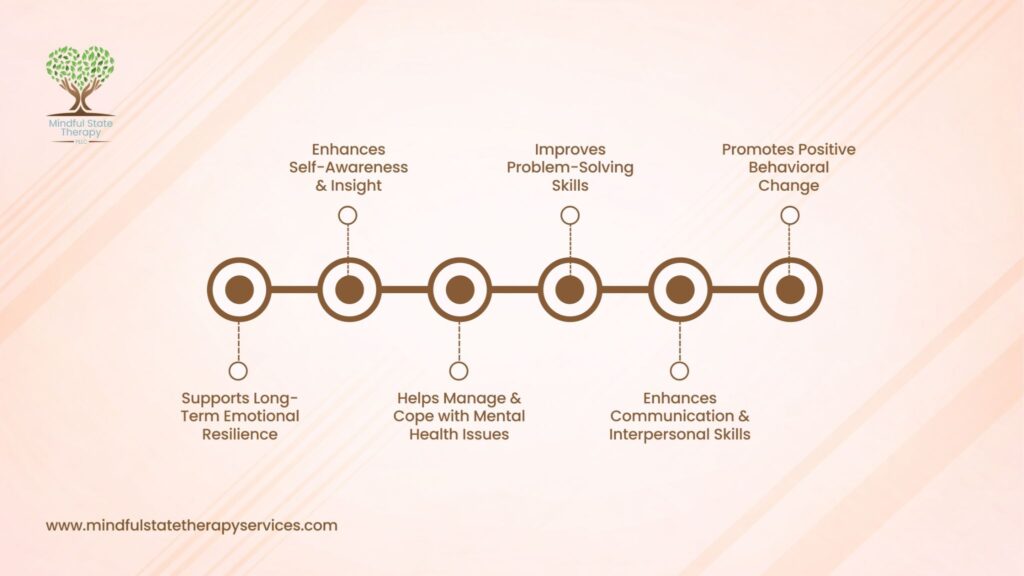
Cognitive Behavioral Therapy (CBT) is one of the most widely used and effective therapeutic approaches in mental health care. It offers immediate and long-term benefits by providing practical tools to support emotional well-being and mental resilience.
1. Supports Long-Term Emotional Resilience
CBT builds emotional resilience by helping individuals manage distressing emotions and negative thought patterns. By gaining a better understanding of their mental processes, clients build lasting skills that continue to support them long after therapy sessions end, improving their ability to handle future challenges.
2. Enhances Self-Awareness & Insight
CBT promotes greater self-reflection, helping individuals understand the connection between their thoughts, emotions, and behaviors. This heightened self-awareness leads to valuable insights that enable clients to break free from negative cycles and make positive changes in their lives.
3. Helps Manage & Cope with Mental Health Issues
CBT provides practical tools to manage and cope with various mental health challenges such as anxiety, depression, PTSD, and phobias. Through structured techniques, individuals learn to reframe negative beliefs and develop healthier emotional responses to stressors.
4. Improves Problem-Solving Skills
One of the core benefits of CBT is its focus on improving problem-solving abilities. It teaches individuals how to approach difficulties systematically, evaluate potential solutions, and make more informed decisions, which enhances both personal and professional effectiveness.
5. Enhances Communication & Interpersonal Skills
CBT helps individuals identify and modify unhelpful communication patterns, improving their relationships with others. By learning effective communication strategies, individuals can resolve conflicts more constructively and build stronger, healthier relationships.
6. Promotes Positive Behavioral Change
CBT encourages individuals to replace negative behaviors with positive ones by challenging distorted thinking. This approach promotes the development of healthier habits and behaviors, leading to overall improvements in quality of life and well-being.
What to Expect When Working With a CBT Therapist
Working with a CBT therapist is typically a collaborative and supportive experience.
Sessions often involve:
- Reflective conversations about current challenges
- Learning new CBT techniques for mental health
- Practicing exercises that increase awareness of thoughts and behaviors
- Gradually building emotional regulation skills
A licensed CBT therapist works at a pace that respects each person’s comfort level and readiness for change.
For many individuals, therapy becomes a space to explore their experiences openly while developing practical tools to support growth and resilience.
Begin Your Journey Toward Emotional Balance with Mindful State Therapy
Living with persistent stress, worry, or negative thought patterns can feel overwhelming at times. You do not have to navigate these experiences alone.
At Mindful State Therapy Services PLLC, our clinicians provide thoughtful, trauma-informed care that may incorporate Cognitive Behavioral Therapy (CBT) alongside mindfulness-based and integrative approaches. Whether you are seeking cognitive behavioral therapy for anxiety, working with a CBT therapist for depression, or exploring online CBT therapy, our goal is to create a safe and supportive space for meaningful change.
We offer flexible therapy sessions that let you access care from the comfort of your home, at your own pace. Our online therapy services are developed to provide the same level of compassionate, personalized care as in-person sessions, ensuring you feel supported throughout your journey.
We believe therapy works best when it is collaborative, compassionate, and aligned with your personal goals. Your care is never rushed or one-size-fits-all. Instead, it is shaped around your experiences, your pace, and your path toward emotional well-being.
Schedule your 20-minute consultation to learn how we can support your journey toward clarity, balance, and resilience.