Do you find yourself lying awake at night, staring at the ceiling while your mind runs through endless scenarios that have not even happened yet? Maybe your thoughts are stuck in a loop of what-ifs. Or maybe you feel the urge to check every door, window, and appliance twice before leaving the house, just to be sure. When these patterns start showing up often, they can be early signs of anxiety.
Over time, anxiety does more than just make you worry. It begins to influence how you think, how you feel, and how you move through the world.
When worry becomes constant, your body feels it too. Your heart may race, your breathing may feel shallow, and your muscles may stay tense without you even noticing. Even moments that should feel calm or happy can seem muted when anxiety is always running in the background. This is usually the point where stress quietly turns into something heavier, and everyday life starts to feel harder than it needs to be.
When this keeps happening, it may be time to consider anxiety therapy. And if the idea of visiting a therapist in person feels overwhelming or hard to fit into your schedule, online anxiety therapy offers a more flexible and approachable option.
In this blog, we will explore how anxiety therapy works, what you can expect from treatment, and how the right kind of support can help you manage symptoms and move toward lasting relief.
What Is Anxiety?
Anxiety is more than feeling nervous. It is the body’s built-in survival system reacting to perceived danger. When activated, the nervous system creates physical tension, faster breathing, and a racing heart to prepare you for a threat, even when no real danger is present.
Unlike fear, which responds to something happening right now, anxiety is future-focused. It reacts to what might happen. When this system stays switched on too long, it becomes exhausting and overwhelming, which is what happens in anxiety disorders.
There are many forms of anxiety, and each can look different:
- Generalized anxiety feels like constant worry
- Social anxiety brings fear of judgment
- Panic disorder causes sudden waves of physical distress
- Trauma-related anxiety makes the body feel unsafe even when it is safe
Physical & Emotional Impact of Anxiety
Anxiety does not live only in the mind. It lives in the body, the breath, the muscles, and the nervous system. This is one of the main reasons why anxiety therapy is so much more than positive thinking or willpower.
When anxiety is active, the body enters survival mode. The nervous system prepares for danger, even when there is no real threat. This can lead to physical symptoms such as:
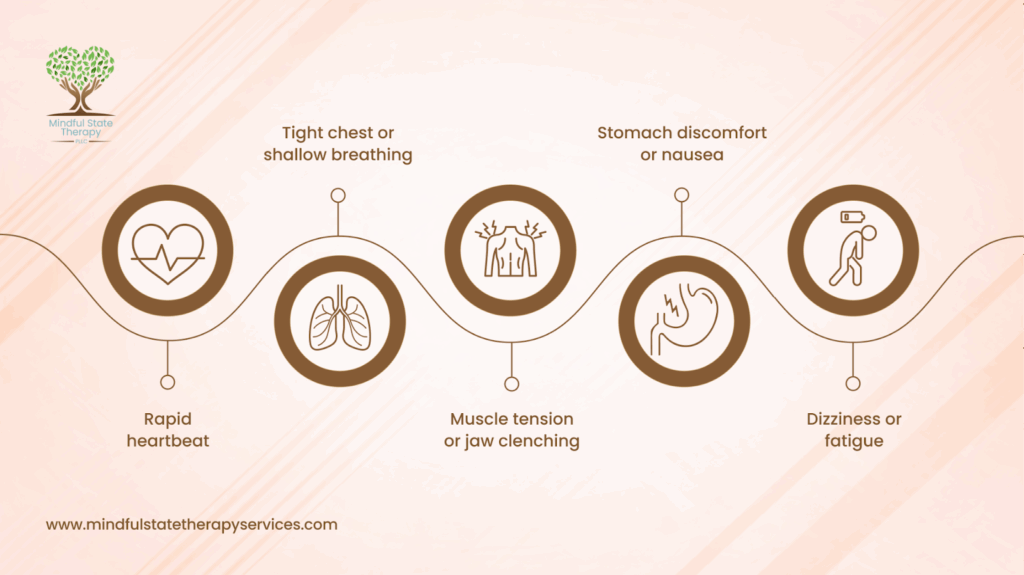
- Rapid heartbeat
- Tight chest or shallow breathing
- Muscle tension or jaw clenching
- Stomach discomfort or nausea
- Dizziness or fatigue
These sensations often feel frightening, which makes the mind even more alert. The body and brain start reinforcing each other. Over time, this pattern can turn everyday situations into sources of fear.
This is where therapy for anxiety disorders becomes indispensable. A skilled licensed anxiety therapist understands that these symptoms are not weakness or failure. They are signs of a nervous system stuck in a state of prolonged high alert.
Let’s explore some of the very effective anxiety therapy options.
Evidence-Based Anxiety Treatment Options
There is no single path that works for everyone. That is why effective anxiety therapy includes a range of proven approaches that can be tailored to your needs. The goal of therapy for anxiety disorders is not to simply cope with fear, but to change how anxiety functions in your mind and body.
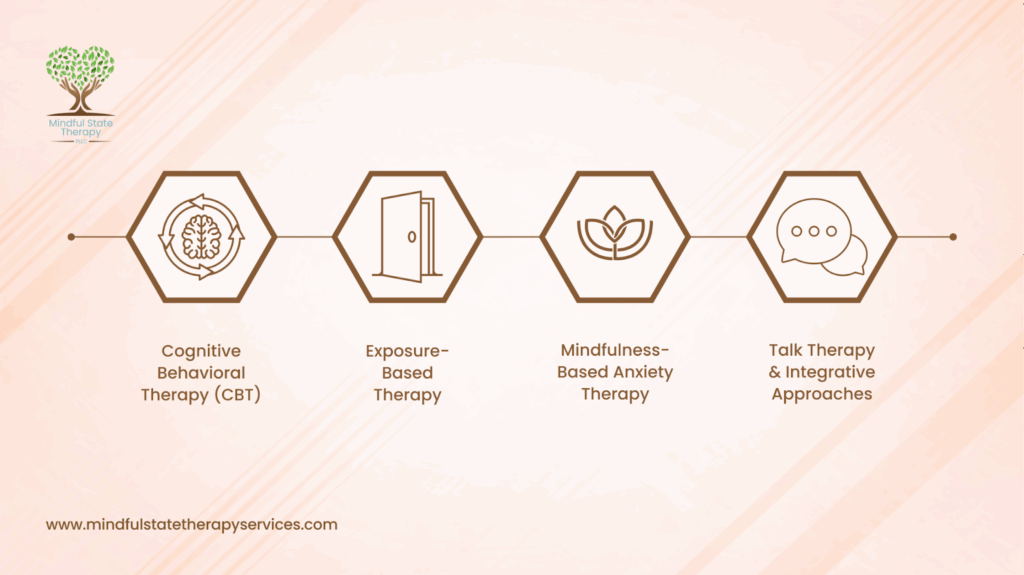
Here are the most widely used and effective anxiety treatment options used in modern anxiety therapy services:
Cognitive Behavioral Therapy (CBT)
CBT is one of the most researched forms of anxiety therapy. It focuses on identifying anxious thought patterns and replacing them with more balanced, realistic ones. With the help of a licensed anxiety therapist, you learn how your thinking fuels anxiety and how to interrupt that loop before it escalates.
CBT is especially helpful for panic attacks, generalized anxiety, and social anxiety, making it a cornerstone of professional anxiety counseling.
Exposure-Based Therapy
Avoidance keeps anxiety alive. Exposure-based work, often used in therapy for anxiety disorders, gently helps you face feared situations in a safe and structured way. Over time, your nervous system learns that you are not actually in danger, and anxiety begins to lose its power.
This method is commonly used for phobias, panic disorder, and trauma-related anxiety.
Mindfulness-Based Anxiety Therapy
Mindfulness approaches teach you how to observe anxious thoughts without being overwhelmed by them. In both in-person and online anxiety therapy, mindfulness skills help you stay grounded, regulate your breathing, and reduce the intensity of stress responses.
This type of anxiety counseling builds emotional flexibility and resilience over time.
Talk Therapy & Integrative Approaches
Some people benefit from exploring how past experiences, relationships, or life stressors shape their anxiety. Talk-based anxiety therapy allows you to process emotions, build insight, and strengthen coping skills in a supportive environment.
Many anxiety therapy services combine structured tools like CBT with deeper emotional work for a more holistic approach.
Together, these anxiety treatment options create a foundation for long-term relief rather than short-term fixes.
When Should You Seek Anxiety Therapy?
Many people wait far too long before reaching out for anxiety therapy. They tell themselves they should be able to “handle it,” or that things are not “bad enough yet.” But anxiety has a way of slowly taking over more and more of your life when it goes untreated.
You may want to consider anxiety counseling if you notice:
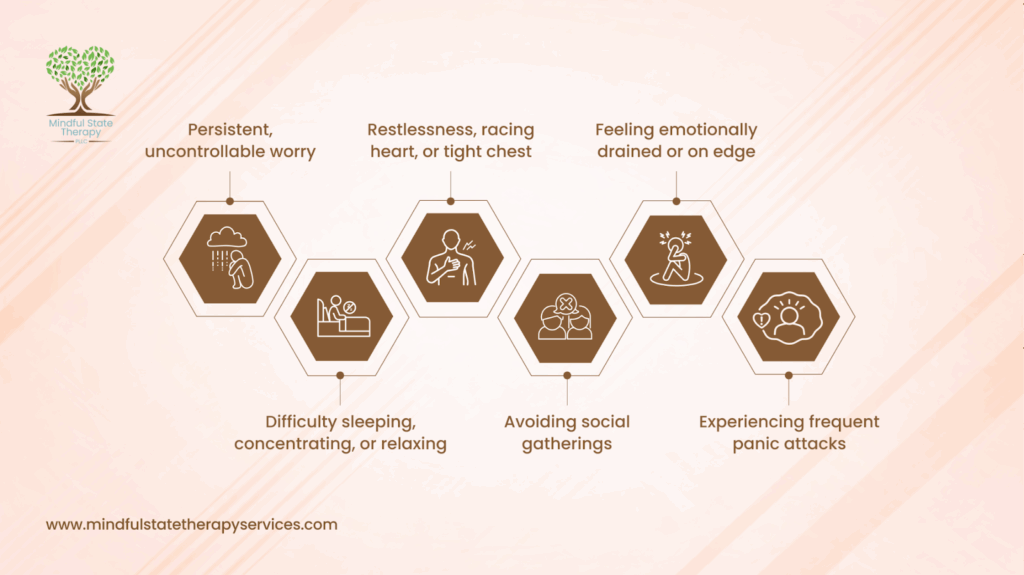
- Ongoing worry that feels difficult to control
- Trouble sleeping, concentrating, or relaxing
- Physical symptoms like a racing heart, a tight chest, or stomach discomfort
- Avoiding people, places, or situations because of fear
- Feeling constantly on edge or emotionally exhausted
- Panic attacks or sudden waves of intense anxiety
These are not signs of weakness. They are signs that your nervous system is overwhelmed and asking for support.
If anxiety is shaping how you think, feel, or live, that is reason enough to explore professional anxiety counseling. You do not have to wait for a crisis to start feeling better.
What to Expect from Anxiety Therapy
Starting anxiety therapy can feel intimidating, especially if you have never worked with a therapist before. Many people worry about what they will have to share, how long it will take, or whether it will actually help. The good news is that anxiety therapy services are designed to feel supportive, not overwhelming.
Here is what the process typically looks like.
Supportive First Session
Your first session with a licensed anxiety therapist is focused on understanding you. You will talk about what has been happening in your life, what symptoms you are experiencing, and what you hope to change. This is not an interrogation or a test. It is a conversation that helps your therapist get a clear picture of how anxiety is affecting you.
Personalized Therapy Plan
No two people experience anxiety the same way. That is why effective therapy for anxiety disorders is always individualized. Your therapist will work with you to identify patterns in your thoughts, emotions, and behaviors, then recommend anxiety treatment options that fit your needs.
This might include:
- Cognitive Behavioral Therapy techniques
- Mindfulness and nervous system regulation tools
- Exposure-based strategies
- Values-based or acceptance-based approaches
All of these fall under the umbrella of professional anxiety therapy, and your plan can evolve as you grow.
Learning Skills You Can Use in Real Life
A major benefit of anxiety counseling is that you gain practical tools you can use outside of sessions. You may learn how to calm your body during panic, challenge anxious thoughts, set healthier boundaries, or respond differently to triggers.
Over time, anxiety therapy helps you feel more capable and less controlled by fear. You begin to notice that anxiety no longer controls you.
Ongoing Support & Progress Tracking
Progress in anxiety therapy services is not about perfection. Some weeks will feel easier than others. Your therapist will regularly check in on what is working, what feels hard, and what needs adjusting.
With consistent professional anxiety counseling, most people notice improved emotional stability, better sleep, stronger relationships, and a greater sense of control over their lives.
Whether you choose in-office sessions or affordable anxiety therapy through online platforms, the process is meant to support you at every step, not rush you through it.
How Anxiety Therapy Builds Long-Term Stability
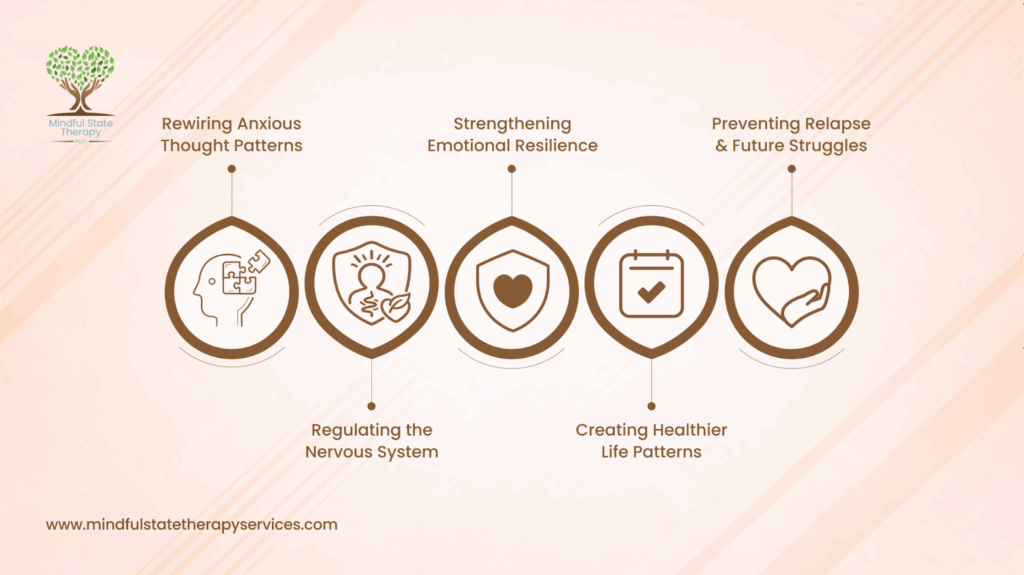
Relief from anxiety is not just about feeling better for a few days or weeks. The true goal of anxiety therapy is to help you create emotional stability that lasts, even when life becomes stressful again. Unlike quick fixes that only quiet symptoms temporarily, anxiety therapy services focus on strengthening the internal systems that support long-term well-being.
1. Rewiring Anxious Thought Patterns
One of the most powerful ways therapy for anxiety disorders creates stability is by changing how your brain responds to stress. Through anxiety counseling, you learn to recognize anxious thinking, interrupt unhelpful mental loops, and replace them with more balanced, grounded perspectives.
Over time, your mind becomes less reactive. Worries that once spiraled now pass more easily, creating a greater sense of calm and control.
2. Regulating the Nervous System
Anxiety is not just in the mind. It lives in the body too. Effective anxiety therapy teaches you how to regulate your nervous system so that your body no longer stays stuck in fight-or-flight mode.
With consistent support from a licensed anxiety therapist, you learn breathing techniques, grounding strategies, and emotional regulation tools that allow your body to settle more quickly when stress arises. This physical sense of safety enables genuine emotional healing.
3. Strengthening Emotional Resilience
Through professional anxiety counseling, you build resilience. That means you are better able to handle uncertainty, setbacks, and change without becoming overwhelmed.
Instead of avoiding difficult situations, you begin to approach them with more confidence. Whether through in-person care or online anxiety therapy, this gradual strengthening helps you trust yourself again.
4. Creating Healthier Life Patterns
Long-term stability also comes from the way anxiety treatment options support healthier habits, relationships, and boundaries. As anxiety decreases, many people notice improved sleep, better focus, and stronger connections with others.
Because anxiety therapy services focus on both emotional insight and practical change, the benefits often continue long after sessions end.
5. Preventing Relapse & Future Struggles
Perhaps one of the most valuable outcomes of anxiety therapy is learning how to recognize early warning signs. Instead of being blindsided by future stress, you know what to watch for and how to respond.
This makes affordable anxiety therapy and consistent care a long-term investment in stability, not just short-term relief.
Understanding how anxiety therapy builds long-term stability matters, but what matters more is knowing you do not have to do it alone. Regulating your nervous system and reshaping anxious patterns is deeply personal, and it becomes more manageable with the right clinical support.
If you’ve been wanting to take the next step, allow us to guide you through
Begin Anxiety Therapy Today & Restore Balance with Mindful State Therapy
Living with anxiety can make even simple moments feel heavy, overwhelming, or out of reach. You do not have to navigate that alone. At Mindful State Therapy Services PLLC, we offer thoughtful, compassionate anxiety therapy designed to meet you where you are and support lasting emotional balance.
Our licensed clinicians provide anxiety counseling that blends evidence-based approaches with mindfulness and trauma-informed care. Whether you are dealing with constant worry, panic, or feeling stuck in cycles of fear and self-doubt, our anxiety therapy services are designed to help you build clarity, confidence, and emotional stability over time.
We believe healing happens in a relationship rooted in safety, respect, and collaboration. Your care is never rushed, standardized, or impersonal. It is shaped around your goals, your nervous system, and your lived experience.
Schedule your 20-minute consultation to learn how we can support your journey toward relief, resilience, and a calmer way of being.