There are seasons in life when sadness makes sense. A disappointment. A loss. A stressful transition. But sometimes, what begins as feeling “off” slowly becomes something heavier and harder to explain.
You may feel exhausted no matter how much you sleep. Activities that once brought joy may now feel distant or meaningless. Even simple tasks like answering emails or getting out of bed can require immense effort. You might notice irritability, emotional numbness, difficulty concentrating, or a quiet sense of disconnection from yourself and others.
If you feel this way, you are far from alone. Depression is a global and national health challenge:
- In 2019, around 280 million people lived with depression, affecting roughly 5.7% of all adults worldwide.
- In the U.S. alone, approximately 1 in 12 adults experience major depression annually, with rates rising steadily among younger generations.
Depression can manifest as persistent sadness, a loss of motivation, emotional numbness, irritability, and changes in sleep or appetite. While these are common signs, they often go unrecognized or misunderstood by those experiencing them.
Moreover, depression does not always look dramatic; often, it is subtle and persistent. When these patterns last for weeks or begin interfering with work, relationships, or daily functioning, depression counseling becomes more than just an option; it becomes a meaningful step toward recovery.
It’s important to remember that depression is not a sign of weakness. Asking for help can be incredibly difficult, but you don’t have to live with this burden alone. Counseling provides structured, compassionate support designed to help you work through these emotional struggles and reclaim your well-being.
In this blog, we’ll explore how depression counseling works, what to expect, and how professional support can help restore balance and hope to your life.
What Is Depression? A Clinical Overview
Depression is more than just feeling sad; it’s a complex mental health condition that can affect every aspect of your life.
According to the Diagnostic and Statistical Manual of Mental Disorders (DSM-5), major depressive disorder (MDD) is diagnosed when symptoms persist for at least two weeks and interfere significantly with daily life. Common symptoms include:
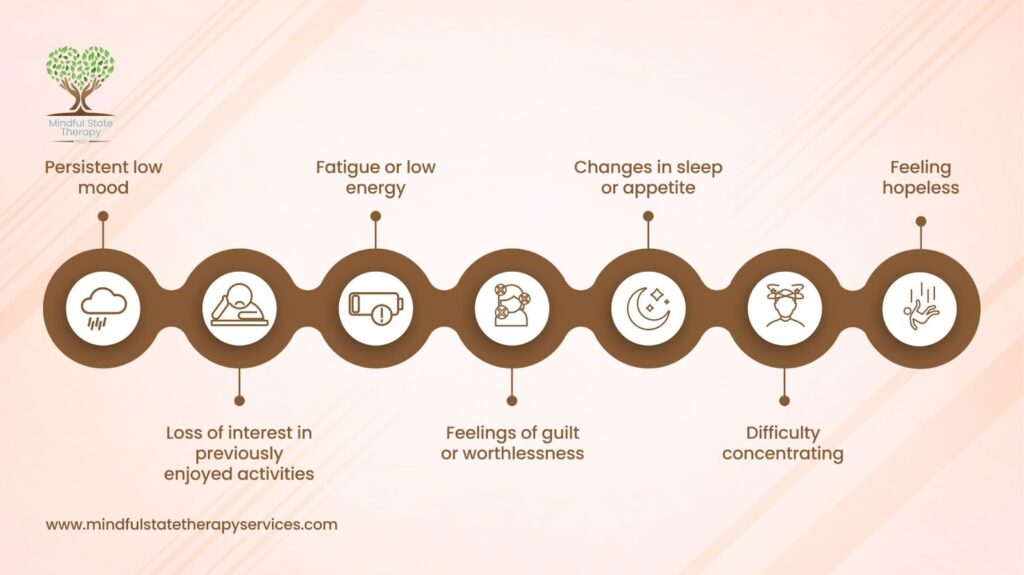
- Persistent low mood
- Loss of interest in previously enjoyed activities
- Fatigue or low energy
- Feelings of guilt or worthlessness
- Changes in sleep or appetite
- Difficulty concentrating
- Feeling hopeless
Depression often coexists with anxiety. These two conditions can reinforce one another, where chronic worry exacerbates exhaustion, and prolonged sadness feeds anxious thoughts. Many individuals benefit from therapy that addresses both depression and anxiety, as the interplay between the two can deepen their impact.
If you’ve been searching for “depression treatment near me,” it could be a sign that what you’re experiencing is more than just temporary stress. Recognizing that your symptoms may be rooted in depression is an important first step toward healing and recovery.
Understanding Depression Counseling
Depression counseling is a structured, evidence-based treatment provided by licensed therapists who are specially trained to address both the emotional and biological factors contributing to depression. Unlike informal support from friends or family, mental health counseling for depression offers:
- A thorough clinical assessment
- Tailored treatment planning
- Evidence-informed therapeutic techniques
- Skill development for emotional regulation and coping
- Ongoing emotional support
Depression therapy is a collaborative process, where you and your therapist work together to identify patterns, explore underlying causes, and create strategies for lasting change.
Many counseling approaches include:
- Cognitive Behavioral Therapy (CBT): Helps challenge negative thought patterns and build healthier behavioral habits.
- Mindfulness-Based Interventions: Focuses on being present and managing overwhelming thoughts or feelings.
- Trauma-Informed Care: Ensures that past experiences are acknowledged and integrated into the healing process.
- Values-Based and Integrative Therapy Models: Connects personal values to actionable change in everyday life.
The ultimate goal of depression therapy is not just symptom relief, but also to restore internal stability and emotional balance, empowering individuals to lead healthier, more fulfilling lives.
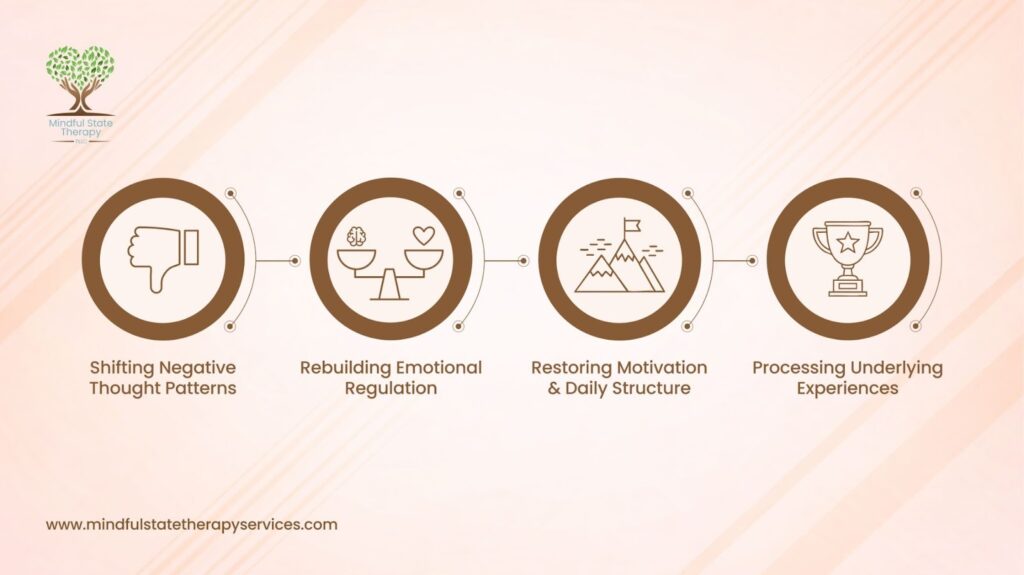
Restoring Your Inner Balance Through Counseling
While depression can feel like an immovable weight, it is often fueled by internal narratives that keep you stuck. Counseling helps you identify these invisible barriers and replace them with a clearer, more grounded perspective.
- Shifting Negative Thought Patterns
Depression often distorts the way you see yourself and the world around you. Thoughts can become overly critical, hopeless, or rigid, creating a cycle that feels impossible to break. Cognitive Behavioral Therapy (CBT) is an effective approach to recognizing these negative thought patterns, such as:
- All-or-nothing thinking
- Catastrophizing
- Overgeneralizing
- Personalization
In depression counseling, you’ll engage in structured exercises that help you gently question and reframe these thoughts. The goal isn’t forced positivity but developing cognitive flexibility to break free from negative mental loops. For many individuals, just this shift brings noticeable relief and better emotional balance.
- Rebuilding Emotional Regulation
Depression can cause emotions to feel overwhelming or, at times, completely numb. Therapy helps you reconnect with your emotional experiences in a safe way. Licensed therapists introduce tools like:
- Emotional awareness exercises
- Grounding techniques
- Nervous system regulation strategies
- Mindfulness practices
These techniques help you manage emotional overwhelm and reestablish stability. For individuals who also experience anxiety alongside depression, these emotional regulation skills become crucial, as anxiety can often intensify depressive symptoms.
- Restoring Motivation & Daily Structure
Depression can strip you of the motivation to do even the simplest tasks. Activities that once felt easy may now seem impossible. Depression counseling often uses behavioral activation strategies, which focus on:
- Setting small, achievable goals
- Gradually reintroducing meaningful activities
- Building momentum step-by-step
- Tracking progress to reinforce effort
This structured approach helps rebuild confidence and restore a sense of agency. Clients often report that even small improvements in their daily routine can significantly improve overall mood and mental clarity.
- Processing Underlying Experiences
Sometimes, depression is tied to unresolved trauma, grief, chronic stress, burnout, or attachment wounds. Therapy for depression includes trauma-informed approaches that gently guide you through processing these experiences, at a pace that respects your emotional readiness. Therapy does not rush you into revisiting painful memories. Instead, it provides a safe space for integrating past trauma in a way that promotes healing, not harm.
Depression counseling is not just about symptom relief; it is about deep, meaningful healing and the restoration of emotional balance, bringing long-term relief and growth.
When to Consider Seeking Support
If you’re experiencing the following, mental health counseling for depression may be beneficial:
- Persistent low mood lasting more than two weeks
- Withdrawal from relationships or activities you once enjoyed
- Increased anxiety alongside depressive symptoms
- Changes in appetite or sleep patterns
- Feelings of worthlessness or hopelessness
- Difficulty functioning at work, school, or home
Depression and anxiety often go hand in hand, and seeking therapy early is key to getting ahead of both. It’s important to remember that looking for depression treatment is not a sign of weakness; it’s a sign of readiness to heal. Therapy can help you better understand your emotions, develop coping strategies, and restore balance to your life.
Don’t wait until symptoms become overwhelming; take the step toward support today.
Depression Counseling as Long-Term Stability
Effective depression therapy goes beyond short-term symptom relief. It strengthens long-term emotional resilience.
Through counseling for depression, you develop:
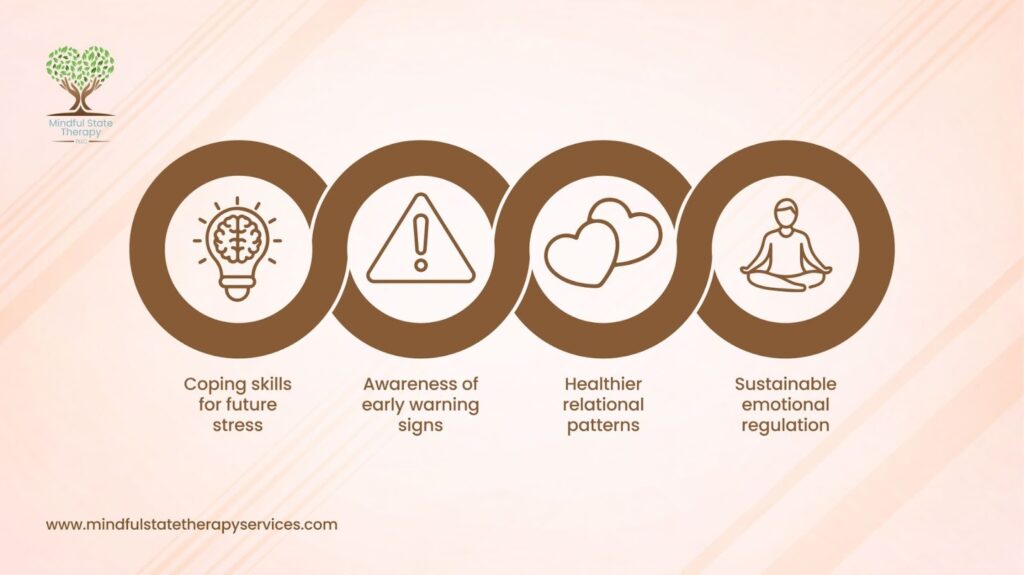
- Coping skills for future stress
- Awareness of early warning signs
- Healthier relational patterns
- Sustainable emotional regulation
Major depressive disorder treatment combined with consistent depression support services reduces relapse risk and supports overall well-being.
With options like online depression counseling, care is more accessible than ever.
Depression can feel isolating, even when surrounded by people who care. But support is available.
Working with a licensed depression therapist through structured depression therapy services offers clarity, steadiness, and hope. Whether you are seeking therapy for depression and anxiety, comprehensive major depressive disorder treatment, or flexible online depression counseling, meaningful relief is possible.
Start Your Journey Towards Emotional Fulfilment with Mindful Therapy
Living with depression can make everyday moments feel distant, heavy, or overwhelming. You may find it hard to feel motivated, connected, or hopeful about the future. You do not have to carry that weight alone. At Mindful State Therapy Services PLLC, we offer compassionate, evidence-based depression counseling designed to support steady healing and lasting emotional balance.
Our licensed clinicians provide personalized depression therapy that integrates cognitive behavioral therapy for depression, mindfulness-based practices, and trauma-informed care. Whether you are navigating major depressive disorder treatment, seeking therapy for depression and anxiety, or exploring flexible online depression counseling, our approach is grounded in safety, collaboration, and respect for your pace.
We believe healing unfolds within a relationship built on trust and intention. Your care is never rushed or one-size-fits-all. It is thoughtfully shaped around your goals, your nervous system, and your lived experience.
Schedule your 20-minute consultation to learn how we can support your journey toward renewed balance, resilience, and hope!