
Do you remember your own teenage years and how entirely different the world felt?
Back then, hard days stayed at school. Today, they follow your teen home through every screen and notification. So when your teen goes quiet, withdrawing from conversations, pulling away from the people they love, that silence carries real weight.
As a parent, you eventually face the same difficult question: Is this just a phase, or does my teen need more support?
The answer seldom lives in a single moment. It lives in the pattern, when the off days start to outnumber the good ones, and something beneath the surface feels harder to reach.
Teen mental health counseling creates the space for that reach. A dedicated, neutral place where your teen can begin to make sense of what they’re feeling, and slowly build the resilience to carry it.
In this blog, we’ll explore the signs your teen might be asking for help, and how the right support can help your family find its way back to one another.
Understanding Mental Health in Adolescence
Adolescence has always come with turbulence, mood swings, identity shifts, emotional highs and lows. That part hasn’t changed. What has changed is the world your teen is growing up in.
Today, there’s no logging off. Every mistake, every social moment, every insecurity can be tracked, compared, and amplified online. That constant visibility makes it harder for teens to find themselves, and harder for parents to see when something is genuinely wrong.
The line between normal growing pains and something deeper isn’t always obvious. But when struggles persist rather than pass, early support can make a lasting difference.
Here’s what that can look like in everyday life.
Common Mental Health Problems in Teenagers
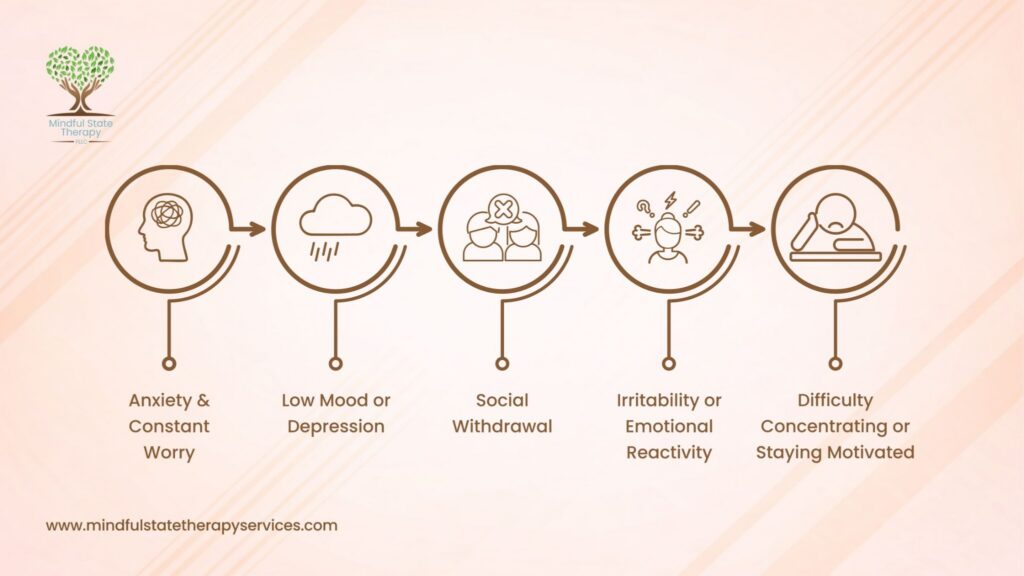
Teenagers face a range of mental health challenges. Some of the most common mental health problems include:
- Anxiety & Constant Worry: Many teens experience heightened anxiety around schoolwork, social situations, and family expectations.
- Low Mood or Depression: Persistent sadness, irritability, or feelings of hopelessness can signal depression.
- Social Withdrawal: Withdrawal from family and friends may indicate underlying emotional distress.
- Irritability or Emotional Reactivity: Increased frustration or anger is a common expression of emotional struggle in teens.
- Difficulty Concentrating or Staying Motivated: Struggles with focus and motivation can be linked to mental health issues like depression or ADHD.
While these behaviors can sometimes be a normal part of development, when they persist, they can hinder a teen’s well-being and future potential.
Knowing these patterns is one thing, but spotting them in your own child is another. Here’s what to actually watch for.
7 Warning Signs a Teenager Needs Mental Health Counseling
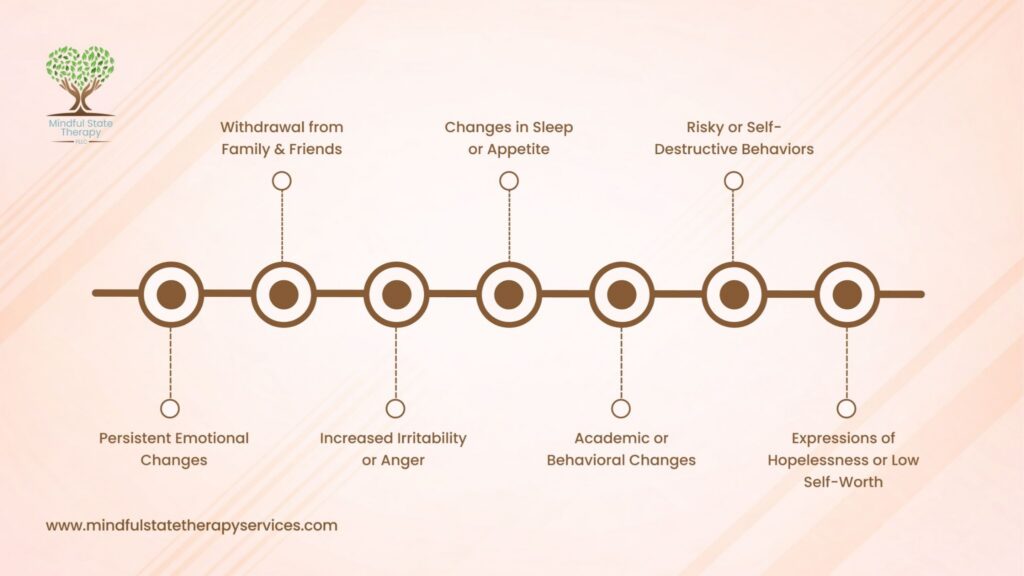
Recognizing when a teenager may need professional help can be challenging, as changes during adolescence are often complicated and vary from one person to the next.
Below are some fundamental signs to look out for:
- Persistent Emotional Changes: If a teen exhibits ongoing feelings of sadness, anxiety, or emotional numbness for weeks, it might indicate underlying mental health struggles.
- Withdrawal from Family & Friends: Although a degree of independence is typical in adolescence, a complete lack of interest in relationships or persistent isolation may indicate emotional issues.
- Increased Irritability or Anger: Frequent, intense outbursts or irritability may reflect deeper emotional challenges or frustrations.
- Changes in Sleep or Appetite: Significant shifts in sleep patterns or eating habits could be signs of depression, stress, or anxiety.
- Academic or Behavioral Changes: A sudden drop in grades or significant behavioral changes at school may indicate internal difficulties.
- Risky or Self-Destructive Behaviors: Engaging in risky behaviors such as substance abuse, non-suicidal self-injury, or other forms of self-harm is a red flag for serious emotional distress.
- Expressions of Hopelessness or Low Self-Worth: Any verbal expression of worthlessness or despair, such as statements about feeling like a failure, should be taken seriously and explored with a mental health professional.
Seeing one of these signs on a bad day is different from seeing several of them consistently. That’s where timing matters.
When to Consider Teen Mental Health Counseling
It’s often not about a single major event but a series of small, consistent signs over time. In fact, research shows that half of all serious adult psychiatric disorders begin by age 14, yet treatment is often delayed by 6 to 23 years after onset. Recognizing these patterns early can make a meaningful difference in ensuring timely intervention.
If a teen experiences prolonged periods of emotional distress, social isolation, or noticeable behavioral shifts, mental health counseling may be necessary.
If a teen experiences prolonged periods of emotional distress, social isolation, or behavioral shifts, mental health counseling may be necessary.
Some common signs that indicate it’s time for a professional to step in include:
- Persistent Emotional Struggles: When feelings of sadness, anxiety, or anger seem to last for weeks without improvement, it could be a sign of a deeper issue.
- Unexplained Changes in Behavior: Withdrawal, lack of interest in hobbies, or deteriorating performance in school or activities often signal that a teen needs support.
- Inability to Cope: If normal life stressors (like exams or friendships) seem to overwhelm a teen, or if they exhibit self-destructive behaviors, professional counseling can provide coping strategies and emotional support.
If you notice these signs, the next step is to seek professional help. Mental health counselors specializing in adolescent care are trained to offer appropriate support for a variety of mental health issues.
Whether through therapy, behavior modification, or counseling, early intervention helps improve outcomes for teens facing emotional difficulties.
Types of Therapy for Teen Mental Health
Different teens need different approaches. Therapy is often tailored based on personality, experiences, and specific challenges.
Some common types of therapy for teen mental health include:
- Cognitive Behavioral Therapy (CBT) for managing thought and behavior patterns
- Mindfulness-based approaches for emotional awareness and regulation
- Trauma-informed therapy for processing difficult experiences
- Family-informed approaches to support communication and connection
- Play therapy, which can be especially effective for teens who struggle to express themselves verbally
- Expressive therapies (such as art, music, or movement), often integrated into trauma work to help process emotions in nonverbal ways
- Internal Family Systems (IFS) therapy, which helps teens understand and work with different “parts” of themselves in a compassionate, structured way
An effective teen mental health counseling process often integrates multiple approaches to meet the teen where they are.
The right type of therapy can make all the difference. When it clicks, the impact goes far beyond symptom relief, shaping how teens understand themselves, relate to others, and navigate challenges long term.
Benefits of Teen Mental Health Counseling
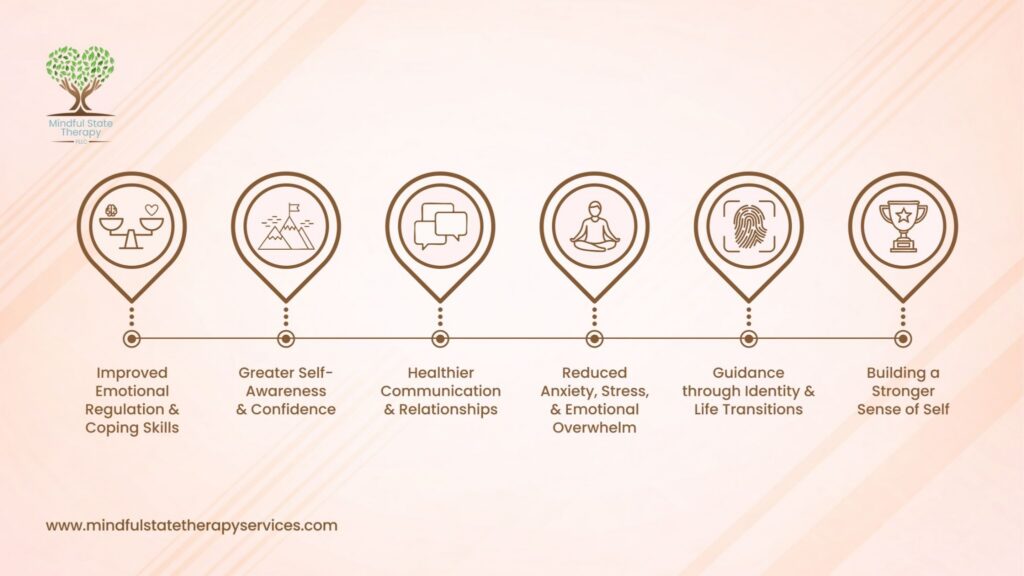
Seeking counseling early in a teenager’s life can provide significant support in managing emotions, improving relationships, and building resilience. Here are some key benefits of counseling for teenagers:
1. Improved Emotional Regulation & Coping Skills
Teens face various emotional challenges that may overwhelm them. Counseling helps them develop strategies to manage stress and emotional responses more effectively, preventing long-term emotional struggles.
2. Greater Self-Awareness & Confidence
Teens often grapple with self-esteem issues and identity formation. Counseling helps teens understand their strengths, goals, and values, fostering confidence and a positive sense of self.
3. Healthier Communication & Relationships
Effective communication is crucial during adolescence. Counseling teaches teens how to express their feelings, listen actively, and resolve conflicts, improving their relationships with family, friends, and peers.
4. Reduced Anxiety, Stress, & Emotional Overwhelm
Teens frequently deal with anxiety and stress. Counseling helps them address these emotions by equipping them with tools to manage stress, challenge negative thoughts, and maintain emotional balance.
5. Guidance through Identity & Life Transitions
Adolescence is a time of change. Counseling supports teens in navigating identity challenges and life transitions, such as relationship shifts or academic pressure, giving them a sense of clarity and control.
6. Building a Stronger Sense of Self
Teen counseling focuses on providing lifelong skills, helping teens better understand themselves, their emotions, and their needs, ensuring emotional stability and personal growth.
The goal of teen mental health counseling is not just to reduce symptoms, but to help teens build a stronger sense of self and emotional stability over time.
How Teen Mental Health Counseling Works
If you’re considering support, understanding how teen mental health counseling works can make the process feel more approachable.
Therapy is not about forcing teens to talk or telling them what to do. It’s about creating a space where they feel safe enough to explore their thoughts and emotions at their own pace.
In teen mental health counseling, sessions may include:
- Open, guided conversations with a licensed therapist
- Tools for managing anxiety, stress, and emotional reactions
- Exploration of identity, relationships, and experiences
- Skill-building for problem-solving and decision-making
The relationship between the therapist and the teen is central. Over time, trust builds, enabling deeper, more meaningful work.
Moreover, if you relate to all of the warning signs and have identified them in your child, it’s significant that you support them, instead of leaving them neglected. In the next section, we’ll discuss how to help a teenager with mental health issues.
Take the First Step Toward Teen Mental Health Counseling
Even outside of therapy, your role as a parent is profoundly important. Furthermore, the therapy is only effective if you, as a parent, support them and are immensely patient with them.
If you’re wondering how to help a teenager with mental health issues, consider:
- Staying open and non-judgmental
- Listening without rushing to fix or advise
- Validating their feelings, even when you don’t fully understand
- Encouraging support while respecting their pace
- Creating a consistent, safe emotional environment
When combined with teen mental health counseling, this kind of support helps teens feel more secure and understood.
Support Your Teen’s Emotional Well-Being with Mindful State Therapy

Seeing your teen struggle can feel heavy. You may not always know what to say, how much to step in, or how to best support them, and that’s a very real place to be.
At Mindful State Therapy Services PLLC, our approach to teen mental health counseling is trauma-informed, developmentally attuned, and centered on emotional safety. We create a space where teens can begin to make sense of what they’re feeling, without pressure, judgment, or the need to have the “right” words.
Our work supports teens in:
- Building emotional awareness and regulation in a way that feels manageable
- Managing anxiety, stress, and life transitions with greater stability
- Strengthening identity, self-understanding, and confidence
- Improving communication and connection within the family system
Through thoughtful, personalized teen mental health counseling, we focus on meeting your teen where they are while gently supporting growth, resilience, and a stronger sense of self.
Healing doesn’t happen all at once. It begins with feeling safe enough to take the first step.
Schedule a consultation to take the first step.