People often say a marriage only works if you give it 100 percent. But that isn’t always true. While commitment and effort are instrumental, relationships aren’t about both partners being at their peak every single day.
A marriage works well when there’s balance in the imbalance. It’s when you’re at 40 percent that your partner steps in with the extra 60. And on other days, when they’re struggling, you carry a little more to help complete what feels like 100 together.
It’s not about equal effort every day; it’s about showing up for each other in different ways, at different times.
But when that balance starts to slip, when one partner keeps giving, and the other feels unseen or unsupported, the shift is often subtle at first.
Relationships don’t fall apart overnight. More often, they drift. Conversations feel heavier, connection starts to fade, and what once felt effortless now requires intention.
Marriage isn’t just about sharing a life. It’s about sharing emotional space, overcoming challenges together, feeling seen, and being understood even when things aren’t perfect.
And like anything meaningful, it needs care, attention, and sometimes support. That’s where marriage counseling comes in.
It’s not a last resort or a sign that something is broken. In many cases, it’s a proactive step toward building a healthier, more connected relationship. Whether you’re facing ongoing conflict or simply feeling distant, counseling can help you reconnect, rebuild trust, and move forward with clarity.
Let’s start with what to look out for.
10 Warning Signs You May Consider Marriage Counseling
When the connection starts to fade, and conversations begin to feel heavier than they should, it’s important to pause and take notice. Here are some signs that you may be going through a challenging phase in your marriage, and could benefit from professional support:
1. Communication Feels Strained Or Unproductive
Conversations either escalate quickly into arguments or shut down completely. You may feel unheard, misunderstood, or emotionally dismissed, even during simple discussions. Over time, this lack of effective communication creates distance and frustration, making it harder to resolve even small issues without the support of marriage counseling.
2. You Keep Having The Same Arguments Without Resolution
It feels like you’re stuck in a loop. The topic may change, but the emotional pattern remains the same. These recurring conflicts often point to deeper, unresolved concerns beneath the surface. Marriage counseling helps uncover those root issues and break the cycle so conversations can actually lead to progress.
3. Emotional Intimacy Has Declined
You no longer feel as close, open, or connected as you once did. Conversations may feel surface-level, and emotional sharing becomes limited or absent. Many couples describe this phase as “feeling like roommates.” Marriage counseling focuses on rebuilding emotional safety and helping partners reconnect on a deeper level.
4. Physical Intimacy Has Changed Significantly
A noticeable decline in affection, touch, or sexual connection can often reflect underlying emotional distance. Intimacy may feel forced, inconsistent, or missing altogether. Marriage counseling helps explore what’s beneath these changes and works toward restoring both emotional and physical connection.
5. Trust Has Been Broken Or Feels Fragile
Whether due to dishonesty, secrecy, infidelity, or past experiences, trust issues can create ongoing tension and insecurity in a relationship. Even small interactions may trigger doubt or defensiveness. Marriage counseling provides a safe and structured environment to rebuild trust through consistent, meaningful communication.
6. You’re Navigating A Major Life Change
Transitions such as becoming parents, moving, career changes, or experiencing loss can significantly shift relationship dynamics. These changes often bring stress, new responsibilities, and emotional strain. Marriage counseling helps couples adapt to these transitions while maintaining connection and mutual support.
7. Resentment Is Building Over Time
When issues are left unresolved, they don’t fade; they accumulate. Over time, this can lead to frustration, irritability, or emotional distance. You may find yourself holding onto past conflicts or feeling easily triggered. Marriage counseling helps address these underlying feelings and create space for a healthier resolution.
8. One Or Both Partners Feel Emotionally Withdrawn
You may notice less effort in the relationship, fewer meaningful interactions, or a tendency to avoid difficult conversations altogether. Even when you’re physically together, there may be a sense of disconnection. Marriage counseling helps re-engage both partners and rebuild emotional presence.
9. External Stressors Are Affecting Your Relationship
Challenges like financial pressure, work stress, addiction, or mental health concerns can spill into your relationship, creating tension and misunderstandings. These external factors often make communication more difficult and increase emotional strain. Marriage counseling helps couples navigate these challenges together more effectively.
10. Feeling Unsure About The Future of the Relationship
Feelings of doubt, confusion, or uncertainty about staying together can be difficult to process on your own. You may feel stuck or unsure about the next step. Marriage counseling offers a neutral space to explore these thoughts, gain clarity, and make decisions with greater understanding and intention.
Significance of Therapy for Married Couples
Many people think marriage counseling or therapy for married couples is only about fixing arguments. In reality, it goes much deeper. It focuses on how partners experience each other emotionally.
Research and clinical practice show that relationship challenges are often rooted in patterns such as emotional disconnection, stress, and unmet needs, not just in poor communication skills. That’s why marriage counseling looks beyond surface-level issues and explores what’s happening beneath the surface.
In a typical process, couples work on:
- Understanding emotional triggers and reactions
- Identifying patterns that lead to conflict
- Learning how to communicate with clarity and empathy
- Rebuilding trust and emotional safety
In essence, counseling is not about taking sides. It’s about helping both partners feel heard, understood, and supported.
When Is the Right Time to Seek Marriage Counseling?
Here’s the honest answer: sooner than you think!
Many couples wait years before seeking help, often after patterns have become deeply ingrained. But research and clinical experience consistently show that early support leads to better outcomes.
Marriage counseling isn’t only for relationships in crisis. It’s just as valuable for couples who want to:
- Strengthen their connection
- Improve communication
- Prepare for life transitions
- Prevent small issues from becoming bigger ones
Think of it less as a repair tool and more as relationship maintenance, with a bonus upgrade. In the next section, let’s discuss how a licensed marriage counselor can benefit your relationship.
Benefits of Marriage Counseling
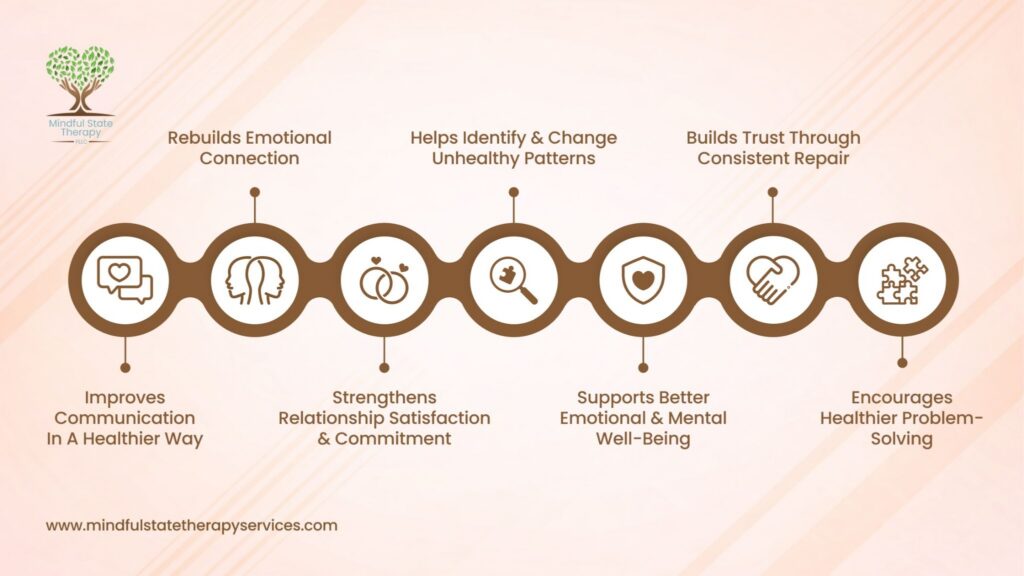
Research on community-based couple counseling has shown that over time, couples may experience improvements in relationship satisfaction and relationship commitment. Moreover, individual emotional well-being and reduced depressive symptoms are also better managed with the help of a professional.
Here are some of the notable benefits of couples counseling for marriage problems:
1. Improves Communication In A Healthier Way
One of the most immediate and lasting outcomes of counseling is better communication. Through couples communication therapy, partners learn to express needs, frustrations, and emotions more clearly, and to listen without becoming reactive or defensive. This creates fewer misunderstandings and more productive conversations.
2. Rebuilds Emotional Connection
Many, many couples do not struggle because love is gone, but because emotional closeness has been disrupted. Marriage counseling helps partners reconnect by exploring the deeper feelings, unmet needs, and stressors that often sit beneath conflict. It also supports healthier attachment and attunement, two foundations of emotional connection that many couples overlook. Attachment shapes how partners seek safety, reassurance, and closeness, while attunement helps each person notice, understand, and respond to the other’s emotional needs more effectively. Over time, this can restore warmth, safety, and a stronger sense of emotional partnership.
3. Strengthens Relationship Satisfaction & Commitment
Research on couple counseling has consistently examined outcomes such as relationship satisfaction and commitment because they are central to long-term relationship health. When couples feel more understood and supported, they are often better able to reconnect with why they chose each other in the first place. This is one of the most meaningful benefits of marriage counseling; it helps strengthen not just the bond but also the willingness to keep investing in it.
4. Helps Identify & Change Unhealthy Patterns
Many relationships become trapped in repeated cycles like blame, criticism, withdrawal, or emotional shutdown. These patterns often become so familiar that couples stop noticing how much damage they are doing. A licensed mental health provider or psychotherapist helps identify these cycles clearly so both partners can begin replacing them with healthier responses and more constructive ways of relating.
5. Supports Better Emotional & Mental Well-Being
Relationship distress not only affects the relationship but can also affect each partner’s emotional health. The study you shared highlights how relationship discord is often linked with depression and reduced well-being. By improving the quality of the relationship, therapy for married couples can also support each individual’s emotional stability, creating benefits that extend beyond the marriage itself.
6. Builds Trust Through Consistent Repair
Trust is rarely restored through one big conversation. It tends to rebuild slowly through repeated moments of honesty, emotional safety, and follow-through. Counseling gives couples a space to practice those moments in a more supported environment, helping them move away from defensiveness and toward consistency and care.
7. Encourages Healthier Problem-Solving
Marriage counseling helps couples shift from trying to “win” the argument to working together on the issue itself. That change is powerful. Instead of escalating conflict, partners begin to problem-solve as a team, which makes decision-making feel less threatening and more collaborative.
8. Creates Longer-Term Relationship Growth
One of the most encouraging findings from the research is that the effects of couples counseling can extend beyond the short term. Follow-up outcomes at three and twelve months suggest that counseling can contribute to ongoing improvements rather than temporary relief alone. This means relationship counseling for married couples can be a meaningful investment, not just for the present conflict, but for the future strength of the relationship.
If, after understanding the benefits of marriage counseling, you’re still unsure about what comes next, that’s completely natural. Taking the first step can feel unfamiliar. To make it easier, here’s a quick look at what you can generally expect when you begin couples counseling for marriage problems.
What to Expect from Marriage Counseling
We understand that knowing what to expect can make this decision feel a lot easier and less overwhelming. When you begin therapy for married couples, the process is structured, supportive, and designed to help you move forward with clarity.
Here’s what it typically looks like:
- Weekly sessions (usually 45–60 minutes) with a licensed mental health provider
- Guided conversations where both partners are encouraged to express themselves openly
- A deeper exploration of your relationship patterns, history, and emotional triggers
- Practical tools and exercises, often part of communication therapy for couples, that you can apply in your day-to-day interactions
Progress doesn’t look the same for every couple:
- Some begin to notice small but meaningful shifts within just a few sessions
- Others may take a few months to work through deeper, long-standing patterns
What truly makes the difference is a shared willingness to show up, stay open, and engage honestly with the process.
And yes, it may feel uncomfortable at first, but that discomfort is often a sign that important conversations are finally happening. That’s where real growth in relationship counseling for married couples begins.
Every relationship goes through phases, some easy, some challenging, and some that feel uncertain. Needing support doesn’t mean something is wrong. It means the relationship is worth working on.
Marriage counseling creates space for that work. It helps you understand not just what’s happening, but why, and more importantly, what you can do about it.
Overcome Relationship Challenges with Counseling At Mindful State Therapy
Relationships can feel deeply fulfilling, but also complex and, at times, overwhelming. When communication becomes strained or the connection feels distant, it does not mean something is broken. It often means support is needed.
At Mindful State Therapy Services PLLC, our couples therapy approach is trauma-informed, relationship-centered, and grounded in both emotional and evidence-based care. We integrate approaches such as cognitive behavioral couple therapy and emotion-focused work to support communication, emotional safety, and lasting connection.
Our work focuses on helping you:
- Understand patterns without blame
- Communicate with clarity and intention
- Rebuild trust and emotional closeness
- Strengthen your relationship in a way that feels sustainable
We believe healing happens in a space that feels safe, collaborative, and respectful of both partners.
Schedule your 20-minute consultation.